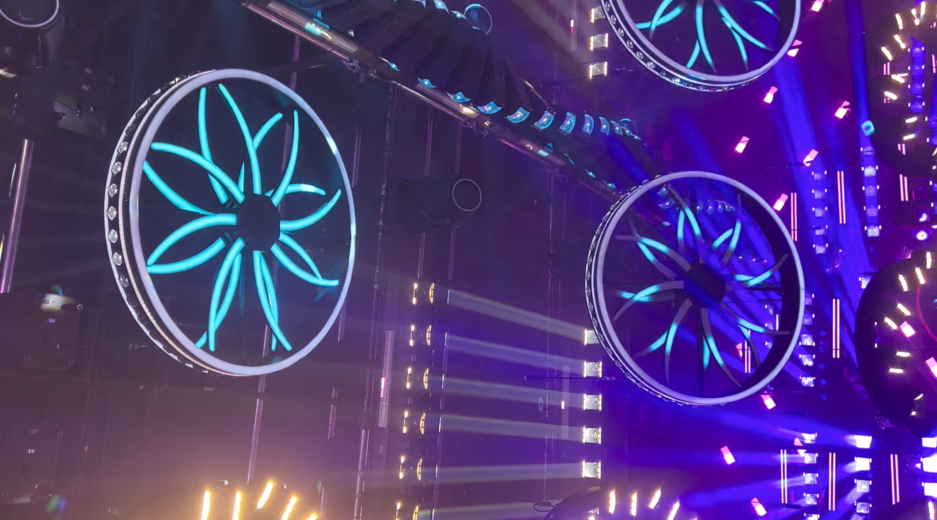
The live entertainment industry has evolved dramatically in recent years. Audiences are no longer satisfied with simply watching a performance—they want to be fully immersed in an experience that combines music, visuals, motion, and emotion.
As a result, stage designers are constantly exploring new technologies that can elevate performances and create unforgettable moments. Among these innovations, kinetic lighting has emerged as one of the most influential trends in modern stage design.
By combining intelligent lighting with synchronized movement, kinetic lighting systems create dynamic three-dimensional environments that transform how audiences experience live events.
What Is Kinetic Lighting?
Kinetic lighting refers to lighting fixtures that can move physically during a performance through motorized lifting systems or automated mechanisms.
Unlike traditional stage lights that remain fixed in one position, kinetic lighting fixtures can:
Move vertically during a show
Create changing geometric formations
Synchronize with music and video content
Produce immersive visual effects
Transform stage architecture in real time
This combination of light and motion allows designers to create experiences that were previously impossible using conventional lighting systems.
Why Is Kinetic Lighting Becoming So Popular?
1. It Creates Stronger Audience Engagement
Human attention is naturally drawn to movement.
While traditional lighting can illuminate performers and scenery, moving lighting elements create an additional layer of visual excitement.
The combination of motion and light immediately captures audience attention and increases emotional engagement.
Benefits include:
Greater visual impact
Enhanced audience focus
Increased emotional response
More memorable performances
2. It Supports Immersive Stage Experiences
Modern audiences increasingly seek immersive experiences rather than passive entertainment.
Kinetic lighting helps create environments that feel alive and constantly evolving.
Examples include:
Floating lighting structures
Moving ceilings
Dynamic visual tunnels
Three-dimensional stage formations
These visual transformations make audiences feel as though they are part of the performance rather than simply watching it.
3. It Enhances Music and Storytelling
One of the most powerful advantages of kinetic lighting is its ability to respond directly to music.
Lighting movements can be programmed to match:
Tempo changes
Musical climaxes
Emotional transitions
Scene changes
For example:
Slow ballads may feature gentle, flowing movements.
High-energy dance tracks may trigger rapid kinetic sequences.
Dramatic theatrical moments can be emphasized through synchronized lighting motion.
This synchronization creates a deeper connection between sound and visuals.
Applications of Kinetic Lighting
Concerts and Music Festivals
Concert productions are among the biggest users of kinetic lighting technology.
Benefits include:
Dramatic stage transformations
Enhanced visual storytelling
Greater audience excitement
Social-media-friendly visual moments
Many international touring artists now incorporate kinetic systems into their stage designs because of their ability to create unique visual experiences.
Corporate Events
Corporate presentations have become increasingly sophisticated.
Kinetic lighting helps businesses:
Showcase new products
Reinforce brand identity
Create premium event experiences
Impress clients and stakeholders
Moving lighting structures can transform a standard conference stage into a high-end visual environment.
Television Productions
Television studios benefit greatly from kinetic lighting.
Advantages include:
Dynamic camera angles
Fast scene transitions
Greater visual depth
Improved audience engagement
Because the lighting itself moves, production teams can create dramatically different looks without changing physical sets.
Theatrical Productions
Modern theater increasingly integrates technology into storytelling.
Kinetic lighting offers:
Dynamic scene transitions
Enhanced visual narratives
Reduced reliance on large scenery changes
Greater creative flexibility
This makes it an ideal tool for contemporary theatrical productions.
How Kinetic Lighting Changes Stage Architecture
Traditional stage design often relies on fixed structures.
Kinetic lighting introduces movement into architectural design.
Designers can create:
Floating geometric shapes
Moving light sculptures
Dynamic stage ceilings
Layered visual environments
Architectural light installations
The stage itself becomes an active part of the performance.
This approach allows venues to achieve dramatic visual transformations without extensive physical construction.
The Role of RGBW Technology
Most modern kinetic systems utilize RGBW LED technology.
RGBW stands for:
Red
Green
Blue
White
This technology offers several advantages:
Rich Color Mixing
Millions of color combinations can be created.
Higher Brightness
White LEDs improve overall output and visibility.
Better Color Accuracy
Colors appear more vibrant and natural.
Smooth Transitions
Color changes can occur seamlessly throughout a performance.
When combined with motion, RGBW technology creates highly immersive visual experiences.
Sustainability and Energy Efficiency
Energy efficiency has become increasingly important in the entertainment industry.
Modern kinetic lighting systems are primarily LED-based.
Advantages include:
Lower energy consumption
Reduced operating costs
Longer lifespan
Less maintenance
Lower heat generation
Compared to traditional discharge lamps, LED kinetic fixtures offer significantly better efficiency while maintaining exceptional performance.
Recommended Kinetic Lighting Solution
.jpg)
For designers looking to incorporate advanced kinetic effects into concerts, festivals, theaters, and corporate events, the With Kinetic Machine 48x20W RGBW Halo Windmill Effect Light is an excellent example of modern kinetic lighting technology.
Key features include:
Dynamic lifting movement
RGBW color mixing
Halo visual effects
High-brightness output
Intelligent control compatibility
Immersive visual performance
This type of fixture allows designers to combine movement, lighting, and visual storytelling within a single integrated system.
Professional manufacturers such as Blue Sea Lighting continue to develop innovative solutions that support the growing demand for immersive stage experiences.
Future Trends in Kinetic Lighting
The future of kinetic lighting is closely linked to several emerging technologies.
Artificial Intelligence
AI-assisted programming will help designers create complex shows more efficiently.
XR and Virtual Production
Kinetic lighting will increasingly interact with virtual environments and LED volumes.
Motion Tracking
Real-time performer tracking will allow lighting systems to respond automatically to movement.
Interactive Experiences
Audiences may eventually influence lighting effects through mobile devices and interactive technologies.
Advanced Automation
Future systems will offer even greater levels of synchronization between lighting, video, audio, and stage mechanics.
The integration of motion, light, and digital media will continue to redefine live entertainment.
Conclusion
Kinetic lighting is transforming the entertainment industry by introducing movement as a core element of stage design.
Its ability to combine:
Motion
Light
Color
Architecture
Technology
creates immersive experiences that captivate audiences and elevate productions.
From concerts and festivals to corporate events and theater productions, kinetic lighting is no longer just an emerging trend—it is becoming a fundamental component of modern stage design.
As audience expectations continue to grow, innovative companies like Blue Sea Lighting are helping event professionals create visually stunning environments through advanced kinetic lighting solutions and intelligent stage technologies.



Blue Sea Lighting is an enterprise with rich experience in the integration of industry and trade in stage lighting and stage special effects related equipment. Its products include moving head lights, par lights, wall washer lights, logo gobo projector lights, power distributor, stage effects such as electronic fireworks machines, snow machines, smoke bubble machines, and related accessories such as light clamps.
Quick Links
For more questions subscribe to our email