1. Introduction
In modern stage lighting, brightness alone is not enough. A good lighting design must create rhythm, emotion, contrast, and visual impact. Among many stage lighting fixtures, the strobe light is one of the most powerful tools for creating instant excitement.
A strobe light is widely used in concerts, nightclubs, music festivals, DJ performances, theaters, television shows, and outdoor events. It produces rapid flashes of light that can match the beat of music, highlight a dramatic moment, or create a strong motion-freezing effect. When used correctly, a strobe light can quickly raise the energy of the whole stage.
For many beginners, a strobe light is simply “a light that flashes.” However, professional strobe lighting includes different technologies, colors, shapes, control methods, and applications. Understanding these differences helps event companies, lighting designers, rental businesses, and venue owners choose the right fixture for each project.
This article explains what a strobe light is, how it works, what types of strobe lights are available, and how to use them safely and effectively.
2. What Is a Strobe Light?
A strobe light is a lighting fixture that emits short, bright flashes instead of continuous light. The flashes may be slow, fast, regular, random, or programmed into patterns. Its main purpose is not general illumination, but visual effect.
Unlike a wash light that fills the stage with color, a strobe light creates strong flashes that make the stage feel more energetic. In a dark environment, fast flashing can make moving objects appear as separate still images. This is why dancers, performers, or stage movements may look like they are “frozen” frame by frame under a strobe effect.
In live performances, strobe lights are often used during music drops, drum beats, transitions, climaxes, and dramatic scenes. A short burst of strobe lighting can make a stage moment feel stronger, sharper, and more memorable.
Modern strobe lights are no longer limited to white flashes. Many LED strobe lights can produce colorful effects, pixel patterns, chase effects, wash effects, and audience blinder effects. This makes them much more flexible than traditional strobe fixtures.
3. How Does a Strobe Light Work?
The working principle of a strobe light is simple: it turns on and off very quickly. The speed of this flashing is called the strobe rate or flash frequency.
Traditional strobe lights often used xenon flash tubes. These lights created very bright white flashes by sending electrical energy through xenon gas. They were powerful and widely used in concerts and clubs, but they consumed more power, produced more heat, and required more maintenance.
Today, most professional stage strobe lights use LED technology. LED strobe lights use many small LED chips arranged in rows, panels, or strips. LEDs can respond very quickly, so they are suitable for fast flashing effects. Compared with traditional xenon strobes, LED strobes usually offer lower power consumption, longer lifespan, less heat, better color options, and more flexible control.
Most modern strobe lights can be controlled by DMX. Through a lighting console, the operator can adjust brightness, flash speed, color, patterns, zones, and built-in effects. This allows the strobe light to work together with music, moving heads, LED screens, lasers, and other stage effects.
4. Why Are Strobe Lights Important in Stage Lighting?
Strobe lights are important because they create a type of excitement that other lights cannot easily replace.
A beam light creates sharp lines in the air. A wash light fills the stage with color. A moving head creates motion. A strobe light creates impact. It can instantly increase the energy level of the performance.
In a concert, strobe lights can follow drum hits or highlight the chorus. In an EDM festival, they can explode with the drop. In a nightclub, they can match the rhythm of the dance floor. In theater, they can simulate lightning, explosions, danger, tension, or dreamlike effects.
Strobe lighting is also useful for stage transitions. A short strobe effect can hide movement, change the mood, or mark the beginning of a new scene. For large outdoor stages, multiple strobe lights can create a strong visual wall that can be seen clearly from a distance.
Because of this, strobe lights are often considered essential fixtures in high-energy stage lighting design.
5. Main Types of Strobe Lights
5.1 Traditional Xenon Strobe Lights
Traditional xenon strobe lights are one of the earliest types of stage strobes. They use a xenon flash tube to produce strong white flashes.
Their biggest advantage is powerful brightness. Xenon strobes can create a sharp, intense white flash that is very suitable for concerts, nightclubs, and dramatic stage moments. Many classic stage strobe effects were created with xenon fixtures.
However, xenon strobes also have disadvantages. They usually consume more power, generate more heat, and need lamp tube replacement after long use. Their color options are limited unless filters are added. Today, they are less common than LED strobes, but they are still valued for their classic high-impact white flash.
5.2 LED Strobe Lights
LED strobe lights are the most common type in modern stage lighting. They use LED chips as the light source and can flash quickly with accurate control.
LED strobes are popular because they are energy-saving, long-lasting, fast-response, and easy to control. Many models support DMX control, dimming, different flash speeds, built-in programs, and sound-activated modes.
LED strobe lights are suitable for concerts, bars, clubs, theaters, TV studios, mobile DJs, rental companies, and event production. They can be small and portable or large and powerful depending on the application.
5.3 White LED Strobe Lights
White LED strobe lights are designed for strong white flash effects. They are often used when the lighting designer wants clean and powerful impact.
White strobes are especially common in EDM shows, rock concerts, DJ stages, and large festivals. When combined with haze or fog, the flash becomes more visible in the air, creating a sharp and dramatic atmosphere.
This type is simple but very effective. It is a good choice when the main goal is strong visual shock rather than color variation.
5.4 RGB and RGBW Strobe Lights
RGB strobe lights can produce red, green, blue, and mixed colors. RGBW strobe lights add white LEDs to create cleaner white and more flexible color mixing.
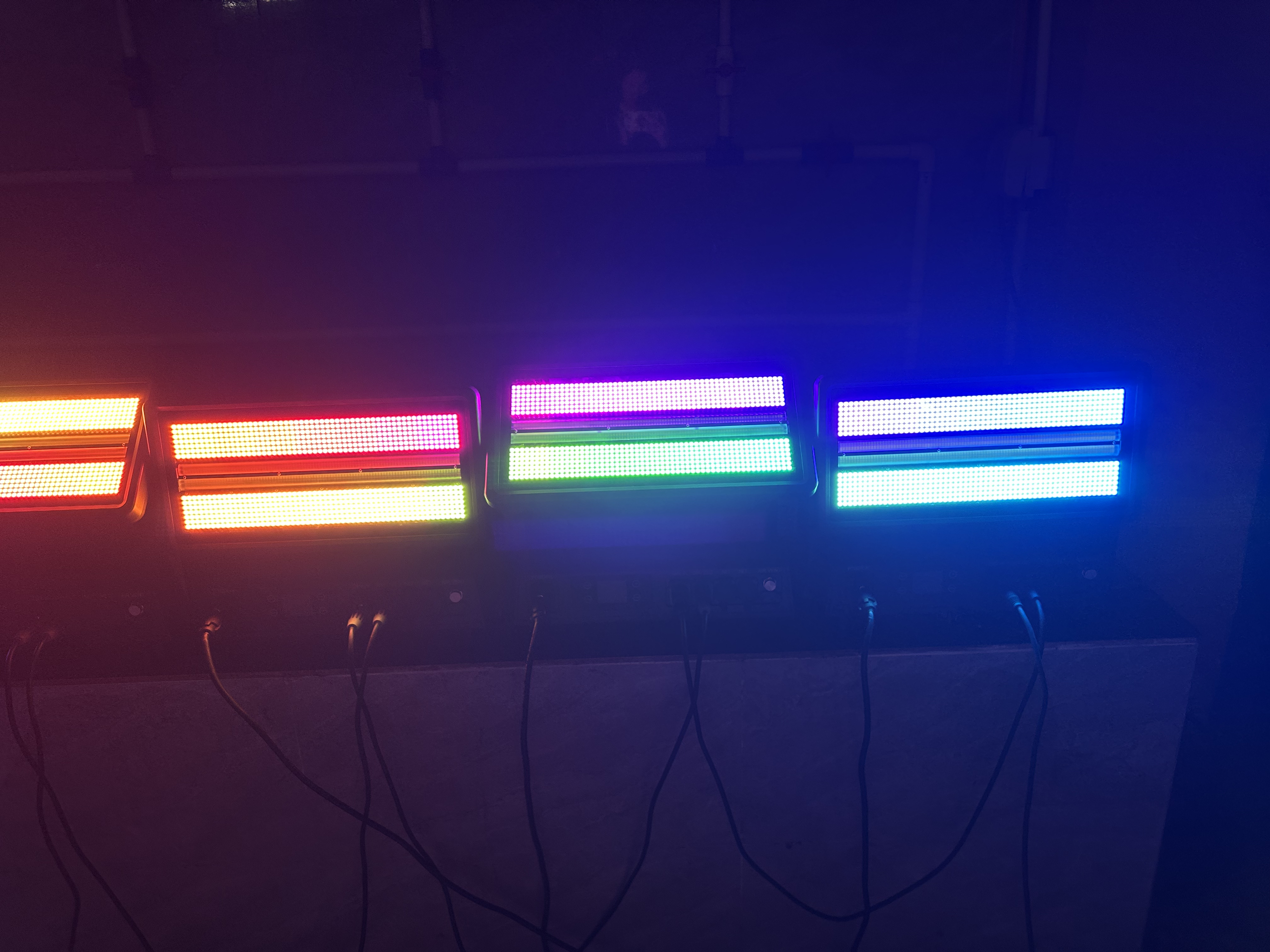
Colorful strobe lights are useful for creating different moods. Red flashes can feel intense and powerful. Blue flashes can create a cool and futuristic atmosphere. Green flashes are often used for electronic music and sci-fi themes. Purple or pink flashes can look stylish and modern.
RGB and RGBW strobes are widely used in clubs, DJ shows, fashion shows, music festivals, theme parties, and immersive events.
5.5 Pixel Strobe Lights
Pixel strobe lights allow different sections of the fixture to be controlled separately. Instead of flashing the whole fixture at once, the light can create chasing effects, waves, running patterns, color blocks, and animations.
For example, one side of the fixture can flash first, then the center, then the other side. Multiple pixel strobe fixtures can be arranged in a line or grid to create large visual patterns.
Pixel strobes are popular in modern concerts, EDM festivals, TV shows, and high-end clubs. They are not only lighting fixtures but also part of the stage visual design.
5.6 Strobe Light Bars
Strobe light bars are long and narrow fixtures with rows of LEDs. They can be installed horizontally or vertically on trusses, stage edges, backdrops, or around LED screens.
Strobe bars are popular because they create clean lines of light and can be easily arranged in groups. Many strobe bars combine white strobe LEDs with RGB color LEDs, so they can work as strobe lights, wash lights, pixel bars, or visual borders.
They are very suitable for concerts, nightclubs, DJ booths, TV stages, and touring events.
5.7 Hybrid Wash-Strobe Fixtures
Hybrid wash-strobe fixtures combine color wash and strobe functions in one unit. Some models also include blinder effects and pixel control.
This type is very practical because one fixture can perform several roles. During calm parts of a show, it can work as a color wash light. During high-energy moments, it can work as a strobe. During audience interaction, it can work as a blinder.
Hybrid fixtures are especially useful for rental companies, mobile event teams, clubs, and medium-sized stages because they reduce the number of lights needed.
5.8 Waterproof Strobe Lights
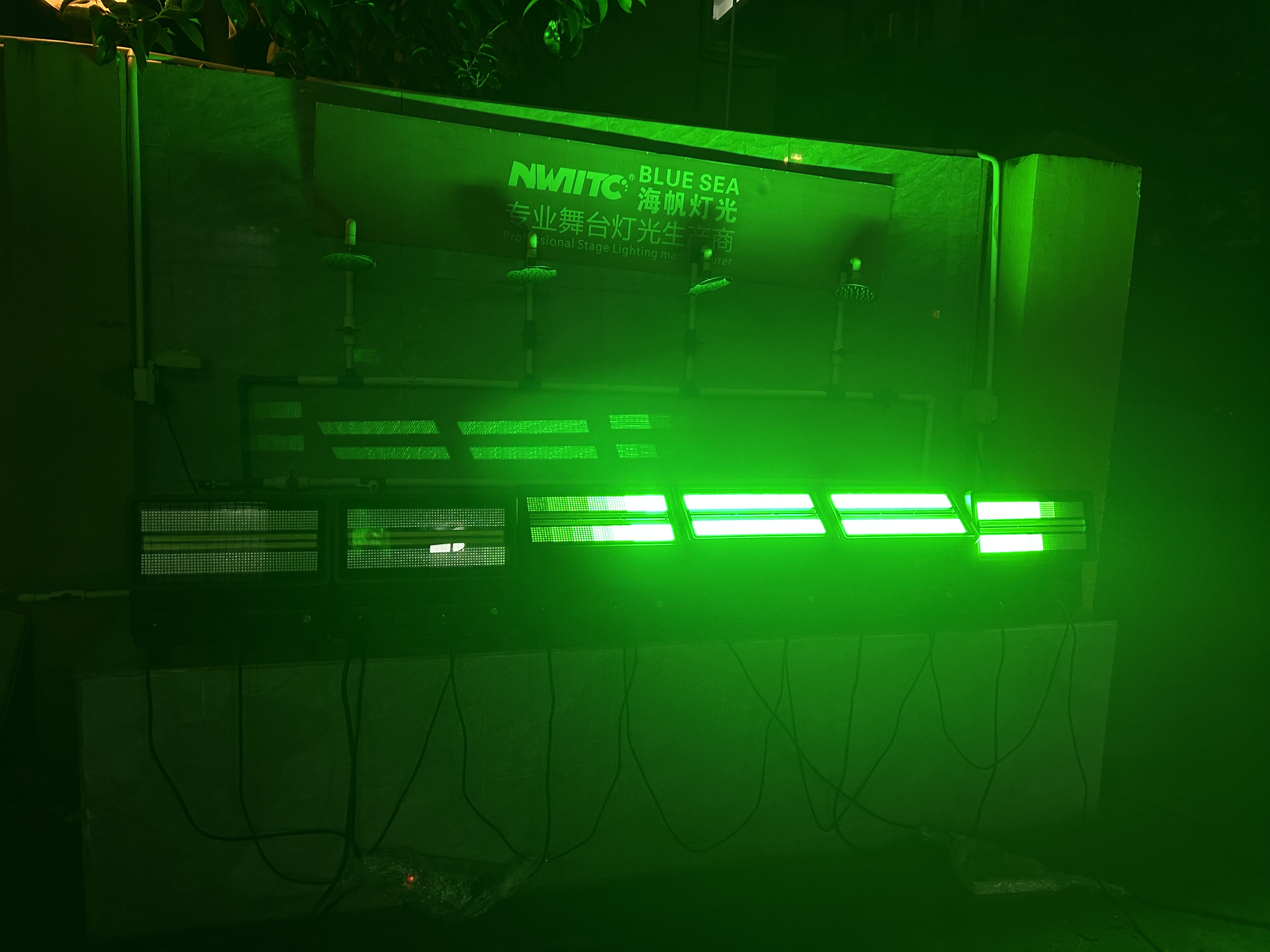
Waterproof strobe lights are designed for outdoor use. They usually have IP-rated housing, sealed connectors, durable brackets, and weather-resistant construction.
They are suitable for outdoor concerts, festivals, theme parks, open-air stages, architectural shows, and touring events. Outdoor environments may include rain, humidity, dust, and changing temperatures, so waterproof design is very important.
However, waterproof fixtures still require proper installation. Power connectors, cable routing, mounting angles, and safety cables must all be handled carefully.
6. Where Are Strobe Lights Used?
Strobe lights are used in many entertainment and event environments.
In concerts, they highlight climaxes, drum hits, guitar solos, and music transitions. In nightclubs and DJ shows, they connect lighting effects with music rhythm. In EDM festivals, they create explosive energy during drops.
In theaters, strobe lights can simulate lightning, explosions, horror scenes, dreams, or sudden changes. In TV shows, they add visual accents to music performances and variety programs. In fashion shows, they make runway moments more dramatic.
Strobe lights are also used in theme parks, haunted houses, exhibitions, product launches, and immersive installations. Outside stage lighting, strobe lights may appear in warning signals, photography, industrial inspection, and scientific applications, but their most common entertainment use is stage visual effect.
7. How to Choose the Right Strobe Light
Choosing the right strobe light depends on the venue, event type, audience size, control system, and desired effect.
For small bars, private parties, and mobile DJs, compact LED strobes or RGB strobes are usually enough. They are easy to install and operate.
For nightclubs and medium-sized stages, RGBW strobes, strobe bars, and hybrid wash-strobe fixtures are better choices because they offer more color and control options.
For large concerts and outdoor festivals, high-power LED strobes, pixel strobe bars, or waterproof strobe fixtures are more suitable. These fixtures provide stronger brightness, better durability, and more professional control.
When choosing a strobe light, buyers should also check brightness, flash speed, dimming, color mixing, DMX channels, pixel control, power connectors, cooling system, housing material, mounting bracket, and IP rating.
A good strobe light should not only be bright. It should also be safe, stable, easy to control, and suitable for the actual stage environment.
8. Safety Tips for Using Strobe Lights
Strobe lights are powerful, so they must be used responsibly.
Rapid flashing may cause discomfort for some people, especially those who are sensitive to flashing lights. For public events, it is recommended to provide a strobe warning when strong flashing effects will be used.
Avoid pointing high-intensity strobes directly into the audience’s eyes for long periods. Do not use full-power fast flashing continuously. Give the audience visual breaks and use dimming control to reduce discomfort.
Performers also need to be considered. Dancers, singers, musicians, and hosts must be able to see the stage safely. Excessive strobe effects may affect movement and visibility.
Installation safety is also important. Strobe lights should be mounted with proper clamps and safety cables. The fixtures need enough ventilation space and should not be covered by curtains, decorations, or fabric. Power cables must be rated correctly and arranged neatly.
Good safety practice does not reduce creativity. It makes the show more professional.
9. BLUE SEA LIGHTING Strobe Lighting Solutions
BLUE SEA LIGHTING provides professional stage lighting solutions for concerts, festivals, clubs, theaters, rental companies, outdoor events, and performance venues.
For strobe lighting, professional design is very important. A good strobe fixture needs high brightness, fast response, stable control, durable housing, safe mounting structure, and long working life.
BLUE SEA LIGHTING offers lighting solutions suitable for different stage applications, including LED strobe lights, RGB strobe bars, hybrid wash-strobe fixtures, waterproof outdoor lighting, and complete stage lighting systems.
Whether the project is a small indoor performance or a large outdoor festival, choosing the right strobe light can improve visual impact, stage rhythm, and production quality.
10. Conclusion
A strobe light is a stage lighting fixture that creates rapid flashes for rhythm, energy, and visual impact. It is widely used in concerts, clubs, festivals, theaters, TV shows, DJ performances, and outdoor events.
There are many types of strobe lights, including traditional xenon strobes, LED strobes, white strobes, RGB strobes, RGBW strobes, pixel strobes, strobe light bars, hybrid wash-strobe fixtures, and waterproof strobes. Each type has its own advantages and suitable applications.
The best strobe effect is not simply the brightest or fastest flash. It should match the music, support the stage design, protect the audience, and be controlled professionally. When selected and used correctly, strobe lighting can turn an ordinary stage into a powerful and unforgettable visual experience.



Blue Sea Lighting is an enterprise with rich experience in the integration of industry and trade in stage lighting and stage special effects related equipment. Its products include moving head lights, par lights, wall washer lights, logo gobo projector lights, power distributor, stage effects such as electronic fireworks machines, snow machines, smoke bubble machines, and related accessories such as light clamps.
Quick Links
For more questions subscribe to our email