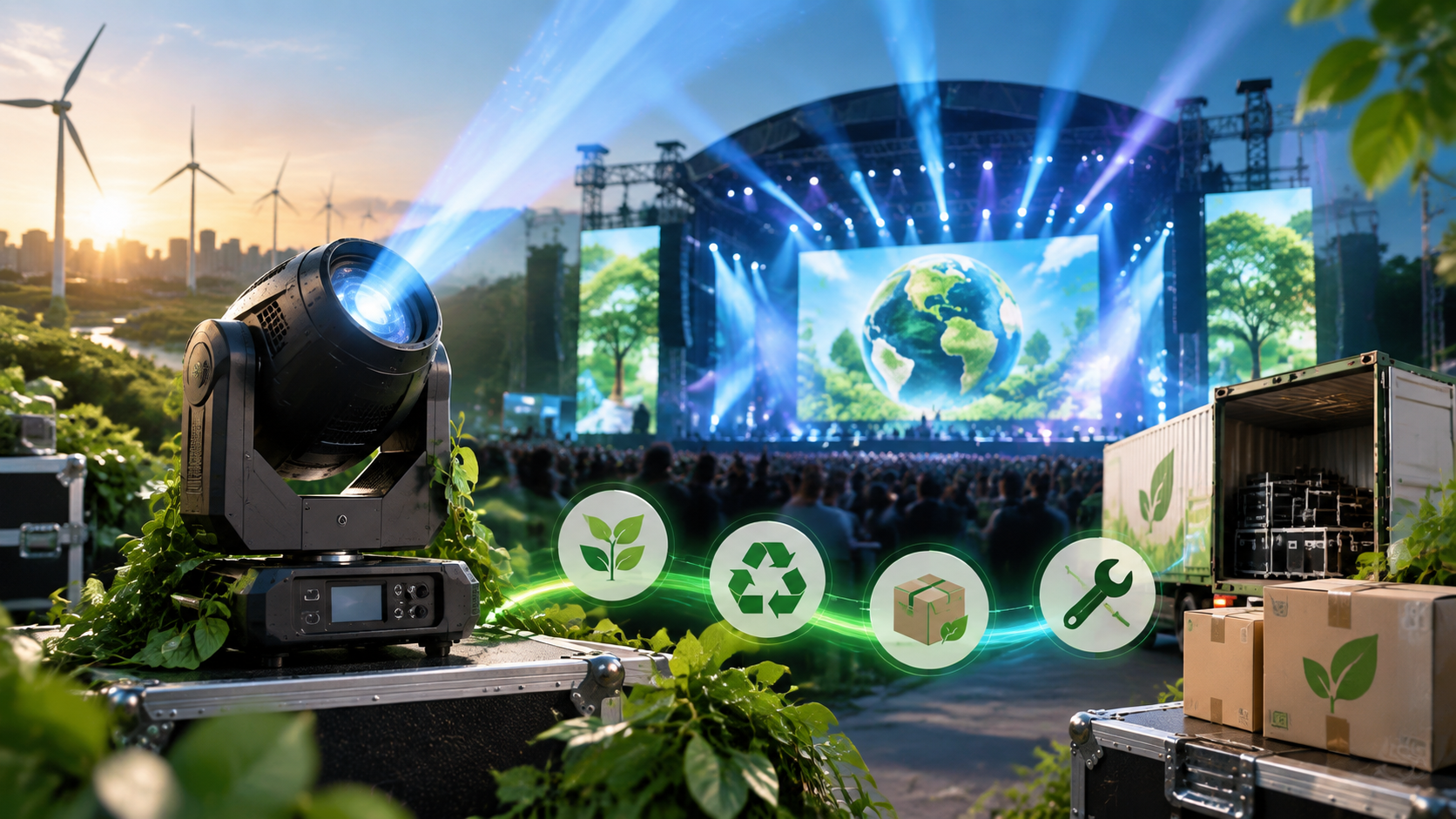
Introduction: Building a Greener Future for the Entertainment Industry
The global entertainment industry is entering a new era where creativity and sustainability must work together. From international concerts and music festivals to corporate events, exhibitions, and architectural lighting projects, every event requires powerful visual experiences while facing increasing environmental responsibilities.
Energy consumption, carbon emissions, material waste, and electronic disposal have become important challenges for event organizers. Traditional lighting systems often require high power consumption, frequent replacement of components, and large amounts of packaging materials during transportation.
As sustainability becomes a key focus worldwide, LED technology is changing the way professional events are designed and operated. Modern LED lighting solutions provide higher efficiency, longer service life, smarter control systems, and improved resource utilization.
Industry standards such as sustainable event management frameworks encourage organizers to consider environmental impacts throughout the entire event lifecycle, including energy use, waste reduction, and responsible purchasing decisions.
For professional lighting manufacturers, sustainability is no longer only about reducing energy usage. It represents a complete approach that covers product design, manufacturing, transportation, maintenance, and end-of-life management.
Blue Sea Lighting believes that the future of entertainment lighting should not only deliver outstanding visual performance but also create positive environmental value.
1. Carbon Footprint Calculation: How Efficient LED Lighting Reduces Energy Consumption at Concerts
A large-scale concert requires thousands of lighting fixtures working together to create impressive stage effects. Moving heads, wash lights, beam lights, strobes, and effect fixtures can operate for many hours every day during rehearsals and performances.
Traditional lighting technologies usually consume significant electrical power because much of the energy is converted into heat instead of usable light output.
LED technology changes this situation.
Modern professional LED fixtures provide higher brightness with lower power consumption. By using advanced LED chips, optimized optical systems, and intelligent control technology, lighting designers can achieve the same or even better visual impact while reducing electricity demand.
For example, imagine a concert using 200 traditional fixtures with an average power consumption of 500W per unit.
The total power consumption:
200 × 500W = 100,000W (100kW)
If the lighting system operates for 8 hours:
100kW × 8 hours = 800kWh
By replacing these fixtures with high-efficiency LED lighting systems consuming approximately 250W while maintaining similar output:
200 × 250W = 50kW
Daily energy consumption:
50kW × 8 hours = 400kWh
The event can potentially save:
800kWh - 400kWh = 400kWh
of electricity for only one performance day.
Over an entire tour with dozens of shows, the energy savings become significant.
Lower electricity consumption means reduced carbon emissions from power generation. It also reduces operating costs for rental companies, production teams, and event organizers.
Beyond energy savings, LED fixtures also generate less heat, reducing the need for additional cooling systems in venues. This creates another opportunity to improve overall energy efficiency.
Sustainable event planning is not about reducing creativity. Instead, efficient LED technology allows designers to create more powerful visual experiences with fewer resources.
2. Circular Economy: Modular Design Makes Lighting Products Easier to Repair Instead of Replace
Sustainability is not only about using less electricity. Product lifespan and maintenance also play an important role.
In the traditional electronics industry, damaged products are often replaced completely because repairing them is difficult or expensive. This creates unnecessary electronic waste.
The circular economy concept focuses on extending product life through repair, reuse, upgrading, and recycling.
For professional stage lighting equipment, modular design is an important solution.
A modular LED fixture allows key components such as:
LED modules
Power supplies
Control boards
Cooling systems
Optical components
to be replaced individually instead of discarding the entire fixture.
This approach provides several environmental benefits.
First, it reduces electronic waste.
A lighting fixture that can operate for ten years instead of five years effectively reduces the number of products entering the waste stream.
Second, it lowers maintenance costs.
Rental companies and production teams can repair specific components quickly without purchasing completely new equipment.
Third, it improves resource efficiency.
Manufacturing a complete lighting fixture requires metals, electronic components, plastics, and energy. Extending product lifespan means these resources deliver value for a longer period.
At Blue Sea Lighting, product development focuses on reliability, serviceability, and long-term performance. A professional lighting product should be considered an investment rather than a disposable electronic device.
3. Packaging Optimization: Reducing Single-Use Plastic During Global Logistics
The entertainment lighting industry operates globally. Products travel thousands of kilometers from manufacturers to distributors, rental companies, and event projects.
Transportation creates another sustainability challenge: packaging waste.
Many traditional packaging methods use large amounts of single-use plastic materials, including:
Plastic wrapping films
Disposable foam protection
Excessive plastic bags
Non-recyclable packaging materials
While packaging protects products during transportation, unnecessary materials increase environmental pressure.
Modern packaging optimization focuses on balancing protection and sustainability.
Effective solutions include:
Reusable Packaging Materials
Reusable transportation cases and protective solutions can reduce repeated waste during equipment movement.
Optimized Product Structure
Compact product design reduces packaging size and improves shipping efficiency.
Reduced Plastic Usage
Replacing unnecessary plastic materials with recyclable cardboard, reusable protection systems, or environmentally friendly alternatives helps reduce waste.
For international lighting manufacturers, packaging is an important part of sustainable product responsibility.
Every improvement in packaging design contributes to reducing environmental impact across global supply chains.
4. Blue Sea Lighting's Long-Term Philosophy: Reducing Electronic Waste Through High-Quality Products
Sustainability requires a long-term vision.
Producing low-cost products with short lifespans may create temporary benefits, but it increases resource consumption and electronic waste over time.
A truly sustainable lighting manufacturer focuses on:
Better product quality
Longer operating life
Stable performance
Easy maintenance
Continuous improvement
Blue Sea Lighting follows this long-term approach by developing professional lighting products designed for demanding environments.
Stage lighting equipment often operates under challenging conditions:
Long working hours
Frequent transportation
Outdoor environments
High-temperature situations
Intensive professional use
Therefore, reliability is essential.
A high-quality LED fixture reduces the frequency of replacement and allows customers to achieve more value from every product.
Through durable materials, advanced engineering, and strict quality control, Blue Sea Lighting aims to provide lighting solutions that support both professional performance and environmental responsibility.
5. Smart Technology and Sustainable Event Management
The development of LED technology is not only improving hardware efficiency but also creating smarter ways to manage event lighting systems.
Intelligent lighting control systems allow designers and technicians to monitor, adjust, and optimize lighting performance in real time.
Advanced control technologies such as DMX512, Art-Net, and sACN provide precise management of professional lighting fixtures. Instead of running every fixture at maximum output throughout an event, operators can adjust brightness levels, colors, and effects according to actual requirements.
This reduces unnecessary energy consumption while maintaining the desired atmosphere.
For example, during rehearsals or waiting periods, lighting output can be reduced automatically. During performances, only the necessary fixtures and effects are activated. This intelligent approach helps event organizers achieve better energy management.
In addition, smart monitoring systems can provide valuable information about equipment performance. Maintenance teams can identify potential issues earlier, reducing downtime and extending product lifespan.
Sustainability and technology are becoming increasingly connected. The future of event lighting will not only focus on brighter outputs but also smarter resource management.
6. Sustainable LED Lighting Supports Every Type of Event
The demand for sustainable lighting solutions is growing across different sectors of the entertainment industry.
Concerts and Music Festivals
Large concerts consume significant amounts of electricity because they require complex lighting systems, visual effects, and long operating hours.
High-efficiency LED fixtures help production teams reduce energy consumption while delivering powerful stage effects.
Corporate Events and Exhibitions
Exhibitions often require lighting equipment to operate continuously for several days.
Energy-efficient LED systems help companies reduce operating costs and demonstrate environmental responsibility to visitors and partners.
Outdoor Events
Outdoor festivals and public events require lighting products that can perform reliably under different weather conditions.
Durable LED fixtures with waterproof protection and efficient thermal management provide stable performance while reducing replacement frequency.
Architectural and Entertainment Projects
Modern buildings, theme parks, hotels, and entertainment venues increasingly use LED technology because of its flexibility, efficiency, and long service life.
Across all applications, sustainable lighting creates a balance between visual creativity and environmental responsibility.
7. The Future of Sustainable Event Lighting
The future of event planning will require closer cooperation between manufacturers, designers, rental companies, and event organizers.
Every stage of the product lifecycle provides opportunities for improvement:
Designing more efficient LED systems
Creating repair-friendly products
Reducing unnecessary packaging
Improving transportation efficiency
Extending product lifespan
Supporting recycling programs
Sustainability is not achieved through a single action. It is the result of continuous improvement.
For lighting manufacturers, innovation means more than creating brighter products. It means developing solutions that provide long-term value while reducing environmental impact.
LED technology represents an important step toward greener entertainment.
By combining energy efficiency, modular design, responsible packaging, and durable manufacturing, the industry can create spectacular experiences while protecting the planet.
Conclusion: Lighting the Future with Sustainable Innovation
The entertainment industry has always been driven by creativity, technology, and unforgettable experiences. Today, it also carries the responsibility of protecting natural resources and reducing environmental impact.
LED innovation provides a practical pathway toward sustainable event planning.
Through carbon footprint reduction, circular economy principles, packaging optimization, and long-lasting product design, modern lighting solutions are helping the industry move toward a greener future.
Blue Sea Lighting believes that professional lighting should deliver not only outstanding performance but also sustainable value.
By investing in high-quality, reliable, and environmentally responsible lighting technology, event professionals can create amazing visual experiences while reducing waste and energy consumption.
The future of entertainment lighting is not only brighter.
It is smarter, more efficient, and more sustainable.



Blue Sea Lighting is an enterprise with rich experience in the integration of industry and trade in stage lighting and stage special effects related equipment. Its products include moving head lights, par lights, wall washer lights, logo gobo projector lights, power distributor, stage effects such as electronic fireworks machines, snow machines, smoke bubble machines, and related accessories such as light clamps.
Quick Links
For more questions subscribe to our email