Introduction: Understanding Stage Lighting for Beginners
Stage lighting is one of the most important elements in creating an impressive performance environment. Whether it is a concert, wedding, theater show, church event, corporate presentation, nightclub performance, or outdoor festival, professional lighting can completely change the atmosphere and audience experience.
For people who are new to lighting equipment, the world of fixtures, DMX control, colors, effects, and programming may seem complicated. However, learning the basic principles does not have to be difficult. With a clear understanding of lighting intensity, color, and distribution, beginners can quickly create professional-looking stage effects.
This article provides a practical introduction to stage lighting and explains essential stage lighting basics for anyone who wants to start designing lighting systems. From simple two-point and three-point lighting methods to avoiding common mistakes, this guide will help beginners build confidence and create better visual experiences.
With modern LED technology, creating professional lighting effects has become easier than ever. Products from Blue Sea Lighting are designed with user-friendly functions, including Auto-mode operation and plug-and-play battery-powered lighting solutions, making professional lighting accessible even for beginners.
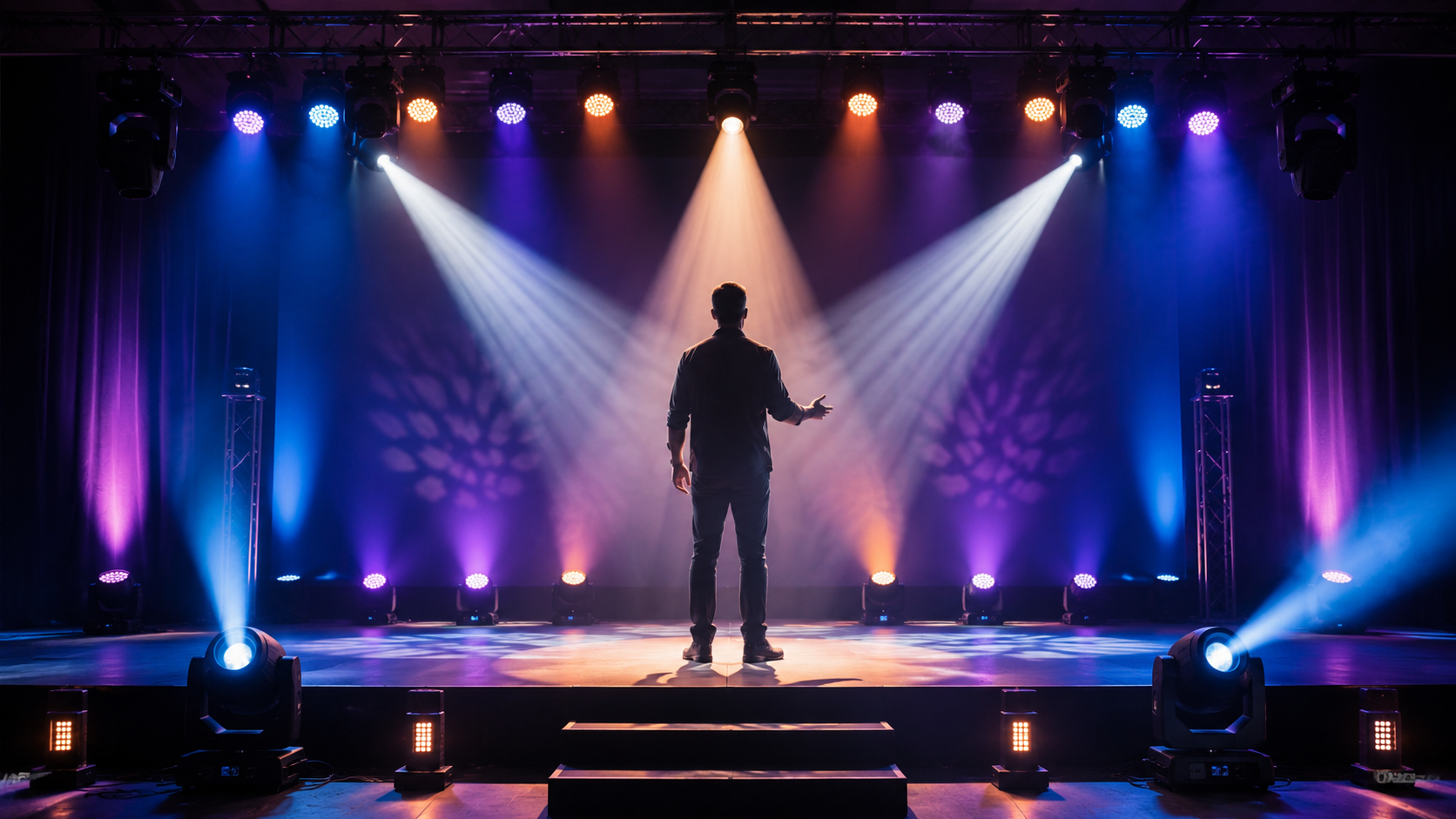
1. The Three Basic Elements of Stage Lighting: Intensity, Color, and Distribution
Before learning complicated lighting programming, beginners should first understand three fundamental concepts:
Light intensity
Light color
Light distribution
These three elements are the foundation of almost every successful stage lighting design.
1.1 Light Intensity: Controlling Brightness and Atmosphere
Intensity refers to how bright or powerful the light appears. It is one of the most important parts of stage lighting basics.
A brighter light can help performers stand out, create energy, and attract audience attention. A softer light can create a comfortable, emotional, or dramatic atmosphere.
For example:
A concert performance usually requires strong beams and high brightness to create excitement.
A wedding ceremony may use softer lighting to create a romantic feeling.
A theater performance needs carefully controlled brightness to highlight specific actors and scenes.
Beginners often think that brighter lighting always looks better. However, too much brightness can reduce visual quality. When all lights are running at maximum power, the stage may become flat and uncomfortable.
Professional lighting designers usually adjust brightness according to:
The size of the stage
The distance between lights and performers
The type of event
The mood of each scene
Modern LED fixtures provide excellent dimming control, allowing users to easily adjust output levels.
For beginners, starting with medium brightness and gradually increasing intensity is a better approach. This helps avoid overexposure and creates a more balanced stage appearance.
1.2 Light Color: Creating Emotion Through Different Colors
Color is another essential part of easy stage lighting.
Different colors create different emotions and visual effects.
Common lighting colors include:
White Light
White light provides natural visibility and is commonly used for:
Speeches
Presentations
Theater performances
Wedding ceremonies
Warm white creates a comfortable and elegant feeling, while cool white provides a modern and energetic appearance.
Red Light
Red represents:
Passion
Energy
Excitement
It is often used for:
Music performances
Dance shows
Nightclub environments
Blue Light
Blue creates:
Calm atmosphere
Depth
Mystery
It is commonly used in:
Concert backgrounds
Stage decoration
Emotional scenes
Green and Purple Light
These colors are often used for creative effects and artistic performances.
With RGB, RGBW, RGBWA, or RGBWA+UV LED fixtures, beginners can easily mix different colors and create thousands of lighting combinations.
For example, an LED PAR light can provide colorful background effects, while a moving head light can create dynamic beam movements.
1.3 Light Distribution: Where the Light Goes
The third important element is distribution.
Distribution means controlling where the light appears on stage.
A professional lighting system does not simply make the whole stage bright. Instead, it creates different lighting areas:
Performer area
Background area
Audience area
Special effect area
Different lighting fixtures have different beam characteristics:
Beam Lights
Beam lights create narrow and powerful beams.
They are ideal for:
Concerts
Large stages
Outdoor events
Spot Lights
Spot lights provide focused illumination.
They are suitable for:
Highlighting performers
Presentations
Theater scenes
Wash Lights
Wash lights provide wide coverage.
They are commonly used for:
Stage background lighting
Color effects
Large area illumination
Understanding these differences is an important step in learning stage lighting for beginners.
2. Simple Lighting Methods: Two-Point and Three-Point Lighting
Many beginners believe professional lighting requires hundreds of fixtures. In reality, a simple lighting setup can already create impressive results.
The two most common beginner methods are:
Two-point lighting
Three-point lighting
2.1 Two-Point Lighting Setup
Two-point lighting is one of the easiest methods for beginners.
It usually includes:
Main light
Fill light
The main light is placed on one side of the performer and provides the primary illumination.
The fill light is placed on the opposite side and reduces harsh shadows.
Benefits of two-point lighting:
Simple setup
Low equipment requirement
Natural appearance
Easy adjustment
For small events, livestreams, DJ performances, and presentations, a pair of LED PAR lights or battery-powered lights can create a professional look.
For example:
A beginner can place two LED fixtures at both sides of the stage:
Left light creates the main effect
Right light balances the shadow
By adjusting brightness and color separately, users can create depth and visual layers.
2.2 Three-Point Lighting Setup
Three-point lighting adds one more fixture:
Key light
Fill light
Back light
The key light provides the main illumination.
The fill light controls shadows.
The back light separates performers from the background.
This simple method is widely used in:
Television production
Theater
Photography
Live events
For beginners, three-point lighting is a great way to understand professional lighting design.
A simple example:
Front LED PAR light → illuminates the performer
Side wash light → creates color atmosphere
Back moving head light → adds depth and movement
Even with a small number of fixtures, this setup can make a stage look more professional.
3. Common Beginner Mistakes and How to Avoid Them
Learning stage lighting is a process of practice and adjustment. Many beginners make similar mistakes when they start using lighting equipment. Understanding these problems in advance can help users create cleaner and more professional results.
The most common beginner mistakes include overexposure, uncontrolled shadows, poor color combinations, and incorrect fixture placement.
3.1 Avoiding Overexposure: More Light Does Not Always Mean Better
One of the biggest mistakes in stage lighting for beginners is using too much brightness.
When every fixture operates at maximum output, the stage can lose its atmosphere. Performers may become difficult to see clearly because the background is brighter than the subject.
For example:
A beginner may install several high-power LED moving head lights and set all fixtures to 100% brightness. Although the stage looks bright, the final effect may appear:
Flat
Too harsh
Without depth
Uncomfortable for the audience
Professional lighting design focuses on balance rather than maximum brightness.
Useful tips:
Adjust brightness according to the scene
Different moments require different lighting levels.
A dramatic performance may need softer lighting, while a concert climax may require stronger effects.
Use dimming functions properly
Modern LED lighting fixtures usually include smooth dimming systems.
Beginners should learn how to:
Reduce unnecessary brightness
Create lighting transitions
Match brightness with music and performance
Balance front and background lighting
If the background is brighter than the performer, the audience’s attention may move away from the main subject.
A good lighting design should guide the audience’s eyes naturally.
3.2 Managing Shadows: Creating Depth Instead of Chaos
Shadows are not always a problem.
Professional lighting designers use shadows to create:
Depth
Emotion
Visual layers
However, uncontrolled shadows can make a stage look messy.
Common causes include:
Lights placed too close to performers
Only one light source from one direction
Incorrect fixture angles
To reduce unwanted shadows:
Use multiple lighting angles
A combination of front lighting and side lighting can create a more balanced appearance.
Avoid placing lights directly below performers
Lighting from a very low angle may create unnatural shadows on faces.
Use back lighting carefully
Back lighting is excellent for creating separation, but too much intensity may make performers appear dark.
3.3 Avoiding Poor Color Combinations
Color selection is another challenge for beginners.
Although modern RGB LED fixtures can produce thousands of colors, not every combination creates a professional appearance.
Some common mistakes:
Using too many colors at the same time
Randomly changing colors
Using colors that reduce visibility
A better approach is to select a simple color theme.
Examples:
Concert lighting
Use:
Blue
Purple
Red
to create energy and excitement.
Wedding lighting
Use:
Warm white
Gold
Soft pink
to create elegance and romance.
Corporate events
Use:
White
Blue
Brand colors
to create a clean professional style.
Simple color choices often create better results than complicated effects.
4. Making Stage Lighting Easier with Modern Technology
Traditional stage lighting often required experienced technicians and complicated programming.
However, LED technology has changed the industry.
Today, beginners can create professional effects through simple operation methods.
This is where Blue Sea Lighting provides practical solutions for new users.
4.1 Auto Mode: A Simple Starting Point for Beginners
For users who are new to lighting control, Auto-mode is one of the easiest ways to start.
Auto-mode allows fixtures to automatically create:
Color changes
Movement effects
Lighting programs
Dynamic scenes
Users do not need advanced DMX programming knowledge.
This makes it ideal for:
Small event organizers
DJs
Wedding companies
Churches
Beginner lighting operators
With Auto-mode, users can quickly understand how different lighting effects work before learning advanced control systems.
4.2 Plug-and-Play Battery Lighting Solutions
Another beginner-friendly solution is battery-powered LED lighting.
Traditional lighting systems usually require:
Power cables
Signal cables
Complex installation
Battery-powered fixtures simplify the process.
Advantages include:
Fast installation
Users can place lights anywhere without worrying about cable arrangement.
Flexible positioning
Battery lights are perfect for:
Weddings
Outdoor events
Temporary stages
Decorations
Easy operation
Many battery-powered LED lights include:
Wireless DMX
Built-in programs
Color presets
Remote control functions
This allows beginners to create professional-looking effects with minimal experience.
Blue Sea Lighting provides easy stage lighting solutions designed for different applications, helping users quickly build reliable lighting systems.
5. Beginner Guide to Choosing the Right Stage Lighting Equipment
For people starting their lighting journey, choosing the correct equipment is very important.
Instead of purchasing many different fixtures immediately, beginners should focus on versatile products.
5.1 LED PAR Lights: The Best Starting Fixture
LED PAR lights are one of the most popular beginner fixtures.
They are suitable for:
Small stages
Events
Weddings
Churches
DJ performances
Advantages:
Easy operation
Multiple colors
Low power consumption
Affordable price
A few LED PAR lights can already create attractive stage backgrounds.
5.2 Moving Head Lights: Adding Dynamic Effects
Moving head lights create movement and professional visual effects.
They can produce:
Moving beams
Color changes
Gobo patterns
Dynamic stage effects
For beginners, models with Auto-mode and simple operation are recommended.
5.3 Battery-Powered Lights: Maximum Flexibility
Battery lights are especially useful for beginners because they remove many installation difficulties.
They are perfect for:
Outdoor events
Mobile performances
Temporary lighting projects
6. Learning Stage Lighting Step by Step
Becoming confident with stage lighting does not happen overnight.
Beginners should follow a simple learning process.
Step 1: Understand Basic Lighting Concepts
Start with:
Brightness control
Color selection
Beam direction
These are the foundation of stage lighting basics.
Step 2: Practice Simple Setups
Try:
Two-point lighting
Three-point lighting
Learn how different positions change the appearance of the stage.
Step 3: Learn DMX Control Gradually
After understanding basic operation, beginners can explore:
DMX channels
Lighting consoles
Programming scenes
Step 4: Create Your Own Lighting Style
Professional lighting is not only about equipment.
It is about:
Creativity
Timing
Understanding the atmosphere
Conclusion: Start Your Stage Lighting Journey with Confidence
Stage lighting may seem complicated at first, but the basic principles are easy to understand.
By mastering the three key elements:
Intensity
Color
Distribution
beginners can create impressive lighting effects.
Simple methods such as two-point and three-point lighting provide a strong foundation for learning professional design.
Avoiding common mistakes like overexposure, uncontrolled shadows, and excessive colors will help create cleaner results.
With modern LED technology, beginners no longer need complicated systems to achieve professional effects. User-friendly solutions such as Auto-mode fixtures and plug-and-play battery-powered lights make lighting more accessible than ever.
Blue Sea Lighting focuses on providing reliable and easy-to-use professional lighting solutions for beginners, event companies, DJs, and stage professionals worldwide.
Whether you are starting your first lighting project or building a complete event system, understanding these stage lighting basics will help you create better performances and more impressive visual experiences.



Blue Sea Lighting is an enterprise with rich experience in the integration of industry and trade in stage lighting and stage special effects related equipment. Its products include moving head lights, par lights, wall washer lights, logo gobo projector lights, power distributor, stage effects such as electronic fireworks machines, snow machines, smoke bubble machines, and related accessories such as light clamps.
Quick Links
For more questions subscribe to our email