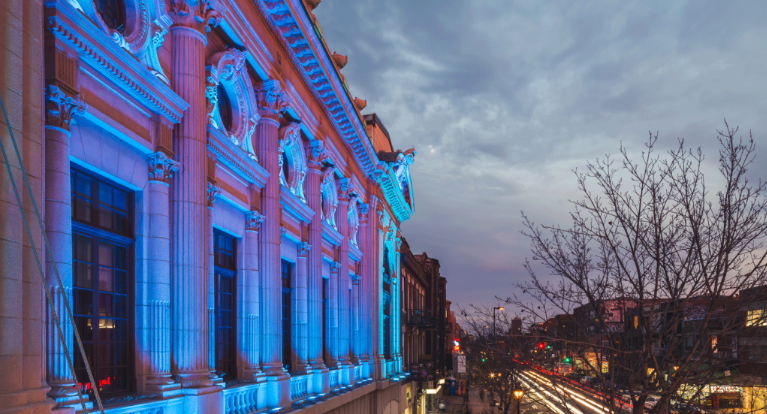
Architectural lighting has changed dramatically in recent years. In the past, many building facades were lit by simple floodlights, warm white wall washers, or fixed landscape lamps. These solutions were useful, but they often created a flat and predictable visual effect. Today, hotels, commercial complexes, cultural venues, city landmarks, bridges, museums, theaters, and public squares need something more powerful. They need lighting that can express identity, attract visitors, support festivals, enhance night tourism, and turn architecture into a visual symbol.
This is where stage lighting technology becomes extremely valuable. Stage lights are designed for impact. They can throw light over long distances, create dramatic beams, mix vivid colors, respond to control systems, and operate with precision. When these technologies are adapted for outdoor architectural lighting, a building facade is no longer just “illuminated.” It becomes a living canvas.
For cities that want memorable night scenes, facade lighting is not only decoration. It is part of the city image. A well-lit building can become a photo spot, a landmark, a brand asset, and a cultural experience. For commercial properties, lighting can increase visibility and make the venue more attractive after sunset. For public buildings, lighting can communicate dignity, openness, and modernity. For hotels and resorts, it can create atmosphere before guests even enter the lobby.
Blue Sea Lighting brings stage lighting thinking into architectural lighting. Instead of treating a facade as a flat surface, the design approach considers distance, angle, color, texture, projection, beam control, weather resistance, and long-term operation. The goal is not only brightness, but also visual storytelling.
1. From Stage to City: Why Stage Technology Works for Architecture
Stage lighting and architectural lighting may seem like different industries, but they share many needs. Both require controlled brightness, accurate color, visual rhythm, reliable equipment, and strong impact from a distance. The difference is that stage lighting usually works for a performance, while architectural lighting must work night after night.
Stage fixtures are designed to create emotion quickly. A beam moving through haze can make a concert feel powerful. A color wash can change the mood of a theater scene in seconds. A projection can place patterns, logos, or textures onto a backdrop. When these same ideas are used on buildings, the facade can support different scenes: daily city lighting, holiday themes, commercial events, national celebrations, tourism festivals, or temporary brand activations.
For example, a business district may use calm white and amber tones on normal weekdays. During a city festival, the same facade may change to red, blue, purple, or gold. For a product launch, the building may show animated colors or projected patterns. For a cultural event, the facade may become part of a synchronized light show.
This flexibility is one of the biggest advantages of using stage technology in architectural lighting. Traditional fixed lighting often gives one look. Stage-inspired facade lighting gives many looks.
2. Long-Throw Beams: The Power and Distance Advantage of Outdoor Wall Washers
One of the most important challenges in architectural lighting is distance. Buildings are large. Facades may be tall, wide, textured, or partially blocked by trees, roads, fences, or surrounding structures. A fixture may need to illuminate from ground level to the upper floors, or from a neighboring position to a distant wall. If the light is weak, the upper part of the facade becomes dark. If the beam is too wide, much of the light is wasted. If the color mixing is poor, the building may look uneven.
High-power outdoor wall washers and city color projectors solve this problem by delivering stronger output and better optical control. They can send light farther, cover broader surfaces, and maintain a more visible color effect across the building.
Long-throw lighting is especially important for:
Large hotel facades
Commercial plazas and shopping centers
Government and cultural buildings
Outdoor theaters and performance venues
Theme parks and scenic areas
Bridges and towers
Exhibition halls and convention centers
Urban landmark projects
When lighting a small garden wall, low-power fixtures may be enough. But when lighting a multi-story building or a landmark structure, power matters. A high-output fixture can reach higher surfaces with better brightness. This makes the whole building look complete instead of only bright at the bottom.
Beam angle is also critical. A narrow beam can travel farther and highlight columns, edges, or vertical lines. A wide beam can wash large areas smoothly. Some city color fixtures are designed to cover broad building surfaces, making them suitable for large-area facade illumination. The key is to choose the right fixture type based on the distance, mounting position, building height, surface material, and desired effect.
A brick facade, glass wall, stone building, and metal curtain wall all reflect light differently. Brick and stone may need stronger output because they absorb more light. Glass can reflect light sharply and may require careful angle control to avoid glare. White walls may need less power but require smooth dimming to avoid overexposure. This is why professional lighting design is not simply “putting more lights outside.” It is a balance between power, distance, beam spread, color, and control.
3. Color as Architecture: Making Buildings Emotionally Visible
Color changes the way people feel about a building. Warm white can make a hotel look welcoming. Gold can make a government or cultural building feel dignified. Blue can create a modern, technological feeling. Red can express celebration or passion. Green can support environmental themes or landscape integration. Purple and magenta can create a fashionable nightlife atmosphere.
Stage lighting technology is strong in color mixing. RGBW systems, for example, allow red, green, blue, and white LEDs to combine into a wide range of colors. The addition of white is important because it improves brightness, color balance, and natural-looking tones. For architectural lighting, this means the building can have both rich festival colors and clean daily white light.
Color also helps divide the facade visually. A designer may use warm light on columns, cool light on upper edges, and dynamic colors on the entrance area. This creates depth. Instead of one flat color, the building gains layers. People can see structure, rhythm, and details.
For commercial buildings, color can support brand identity. A shopping center may use brand colors on weekends. A hotel may use soft gold and white to create a premium feeling. A cultural venue may use changing colors to match different performances. A city landmark may use themed colors for holidays, public campaigns, or international events.
With DMX, Art-Net, or other professional control methods, facade lighting can become programmable. The building can fade from one color to another, pulse gently, run slow waves, or create festival scenes. The important point is not to overuse motion. Architectural lighting should respect the building. Dynamic effects work best when they support the structure rather than hide it.
4. Projection on Building Facades: Turning Walls into Visual Screens
Projection is another important way stage technology enters architectural lighting. In theaters and concerts, projection is used to display images, patterns, textures, logos, and scenery. On building facades, projection can turn a plain wall into a storytelling surface.
There are different levels of projection. Simple gobo projection can place a logo, pattern, or symbol onto a wall. More advanced projection mapping can align images with windows, columns, edges, and architectural details. Even without full video mapping, light projection can create strong visual identity.
Projection on building facades is useful for:
Brand logos on commercial buildings
Holiday patterns on hotels and plazas
Cultural motifs on museums and theaters
Decorative textures on plain walls
Festival themes on city landmarks
Temporary event visuals
Entrance guidance and visual signage
Projection works best when the surface is suitable. A flat or lightly textured wall gives clearer images. Very dark or highly reflective surfaces may reduce clarity. The distance between projector and facade, ambient light level, mounting height, and lens angle all affect the final result.
In architectural use, projection should be carefully planned. A bright city environment may require stronger output. A facade with many windows may need selective placement to avoid glare. A historic building may need a softer approach to respect its character. A modern commercial facade may allow more dynamic patterns and color movement.
Stage technology is helpful because it gives designers more tools. A city color projector can wash a wide surface with color. A gobo projector can add patterns. Moving head fixtures can create direction and movement. Together, they can produce a complete night scene: base lighting, highlight lighting, projection, and dynamic accents.
5. Durability: Engineering Standards for 365 Days Outdoors
Outdoor architectural lighting is very different from indoor stage lighting. A concert fixture may run for several hours during a show. A facade fixture may operate every night for years. It must face sun, rain, wind, dust, humidity, temperature changes, insects, pollution, and sometimes salt air near coastal areas.
This is why durability is not optional. It is one of the most important factors in facade lighting.
A professional outdoor architectural fixture should consider:
Waterproof protection
Dust resistance
UV exposure
Heat management
Cold and hot temperature changes
Corrosion resistance
Stable power connections
Reliable signal connections
Strong housing materials
Safe mounting structure
Easy maintenance
An IP65 rating is commonly used for outdoor lighting equipment because it indicates protection against dust and water jets. For facade lighting, this level of protection helps the fixture survive rain and outdoor dust. But IP rating is only one part of durability. The real engineering challenge is long-term stability.
Heat is a major issue. High-power LEDs generate heat. If the heat is not controlled, brightness can drop, color can shift, and component life can become shorter. A good outdoor fixture needs effective cooling, temperature control, and overheating protection. This is especially important when the fixture works for many hours every night.
Housing material also matters. Die-cast aluminum is commonly used in professional fixtures because it provides strength, heat dissipation, and durability. Outdoor connectors are also important. Waterproof power and signal connectors reduce the risk of failure caused by moisture.
Maintenance should be considered from the beginning. A facade lighting system may be installed high on a building, on poles, on rooftops, or in landscape areas. If fixtures fail often, maintenance becomes expensive. Reliable equipment reduces service costs and keeps the night scene consistent.
Good architectural lighting is not just beautiful on opening night. It must remain beautiful after months and years of real outdoor operation.
6. Control Systems: Making the Facade Flexible
A modern facade lighting system is often controlled by DMX, Art-Net, RDM, or other professional protocols. These systems allow designers and operators to adjust brightness, color, scenes, timing, and effects.
DMX is widely used in stage lighting and is also useful for architectural projects. It allows precise control of channels such as dimming, color, strobe, movement, and effects. Art-Net allows lighting data to be transmitted over a network, making it easier to manage large systems with many fixtures. RDM supports bidirectional communication, which can help with addressing and monitoring compatible devices.
Control flexibility is important because a building may need different lighting modes:
Daily mode
Energy-saving late-night mode
Weekend mode
Holiday mode
Festival mode
Commercial event mode
Emergency or special announcement mode
Maintenance mode
For example, a hotel may use warm white and soft gold from 6 p.m. to 10 p.m., then reduce brightness after midnight. A city landmark may run a colorful show every hour during a festival. A shopping mall may synchronize facade lighting with outdoor music or public events. A cultural center may change colors according to the performance inside.
Stage lighting control makes these changes easier. Instead of rewiring the system, the operator can update programming. This reduces long-term cost and increases creative value.
7. Blueseal City Color Series: Designed for Landmark Illumination
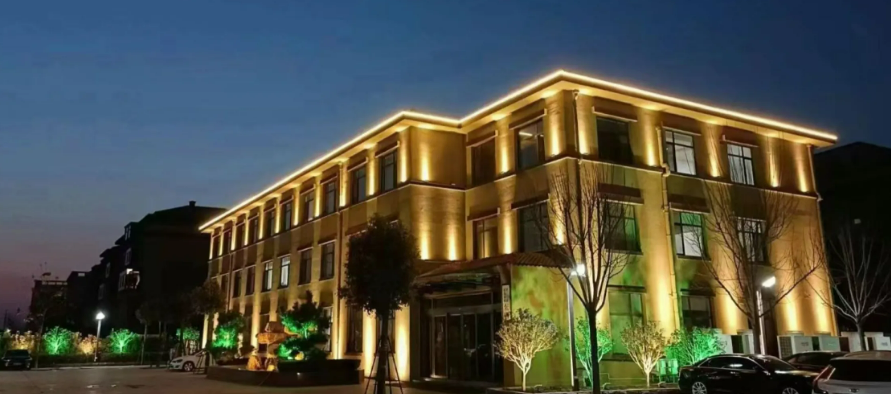
The Blueseal City Color series is designed for outdoor building lighting, city landmarks, and large-area color wash applications. These fixtures bring the brightness and color control of stage lighting into architectural environments. They are suitable for projects that need strong output, wide coverage, vivid RGBW color, and reliable outdoor performance.
A recommended model is the Outdoor IP Waterproof 50x20W RGBW 4IN1 LED Moving Head City Color Projector. This fixture uses 50 pieces of 20W RGBW 4-in-1 LEDs, offers a 110° beam angle, supports 2700K–8000K CTO adjustment, includes 0–100% linear dimming, supports DMX, Art-Net, and RDM, and is built with an IP65-rated die-cast aluminum housing for outdoor use.
For facade lighting, these features are practical. The 50x20W LED configuration gives strong output for large surfaces. RGBW color mixing allows both vivid color effects and cleaner white tones. The wide 110° beam angle helps cover broad areas smoothly. CTO adjustment is useful when designers need warm, neutral, or cool white moods. Linear dimming helps create smooth fades instead of sudden brightness jumps.
The IP65 rating and die-cast aluminum housing are also important for permanent outdoor installation. City lighting projects need fixtures that can handle weather exposure, not just occasional use. With professional control options such as DMX, Art-Net, and RDM, the fixture can be integrated into larger lighting systems for buildings, plazas, bridges, or scenic areas.
This type of fixture is especially useful when a project needs both architectural coverage and stage-style expression. It can wash a building with color, support themed lighting scenes, create a festival atmosphere, and help transform ordinary facades into memorable night landmarks.
8. Application Scenarios for City Color Lighting
City color projectors and high-power outdoor wall washers can be used in many types of architectural projects. Each scenario requires a different lighting strategy.
For hotels, facade lighting should create a welcoming and premium first impression. Warm white, gold, amber, and soft color transitions can make the building feel comfortable and elegant. During holidays, the hotel can add red, green, blue, or festival colors to attract guests and create photo opportunities.
For shopping centers, lighting should be more energetic. Color changes, dynamic scenes, and entrance highlights can increase nighttime foot traffic. A commercial plaza can use light to guide visitors from the street to the entrance. The facade can become part of the brand experience.
For cultural buildings, lighting should respect the architecture. Museums, theaters, libraries, and art centers often need a balance between creativity and dignity. Projection patterns can reflect local culture, while soft color washing can highlight columns, rooflines, and wall textures.
For bridges and public infrastructure, long-distance visibility is key. Lighting must be strong enough to be seen across roads, rivers, or large open spaces. It should also be durable because maintenance can be difficult and costly.
For theme parks and scenic areas, lighting can be more theatrical. Buildings can change scenes according to shows, seasons, or story themes. Stage technology is especially useful here because it supports programming, color transitions, and synchronized effects.
For government or landmark buildings, the lighting design should be stable, elegant, and symbolic. Dynamic effects may be used for major events, but daily lighting often needs to be calm and refined.
9. Design Principles: How to Make Facade Lighting Look Professional
A professional facade lighting project should not simply use the brightest lights available. Brightness without planning can cause glare, light pollution, uneven walls, and visual fatigue. Good design requires clear thinking.
First, understand the building shape. Look at columns, windows, rooflines, entrances, corners, materials, and decorative details. Lighting should reveal these features, not cover them.
Second, decide the viewing distance. A building seen from a nearby street needs different lighting than a tower seen from far away. Close viewing requires softness and detail. Long-distance viewing requires stronger contrast and clearer outline.
Third, choose the right color strategy. Daily colors should be comfortable and suitable for the building. Festival colors can be more dramatic, but they should still match the architecture.
Fourth, control glare. Outdoor lighting must consider pedestrians, drivers, nearby residents, and surrounding buildings. Fixtures should be aimed carefully. Overly bright light into windows or roads can cause problems.
Fifth, plan maintenance. Fixtures should be installed where they can be accessed safely. Cable routes, waterproof connections, and control boxes should be organized clearly.
Sixth, test at night. Lighting always looks different on site than in drawings. Surface material, ambient light, distance, and weather can all affect the result. Night testing helps adjust angles, brightness, color, and scenes.
10. Energy and Sustainability
Modern LED architectural lighting can be more efficient than older discharge or halogen systems, but energy still matters. Large facade projects may include many fixtures, and they may operate for long hours. A good design should provide strong visual impact without wasting power.
There are several ways to improve efficiency:
Use high-output fixtures only where needed
Reduce brightness during late-night hours
Create different power modes
Avoid lighting areas that do not need illumination
Use control systems to schedule scenes
Choose fixtures with good optical efficiency
Maintain fixtures to prevent dirt from reducing output
Sustainability is not only about lower power consumption. It is also about longer product life, less maintenance, fewer replacements, and better control of light pollution. A durable fixture that performs reliably for years is often more sustainable than a cheaper fixture that fails quickly.
11. The Future of Architectural Lighting
The future of architectural lighting will be more interactive, programmable, and integrated. Buildings will not only be lit; they will communicate. Facades may respond to festivals, weather, public events, music, or city themes. Lighting systems may connect with media servers, sensors, smart city platforms, and remote management tools.
Stage lighting technology will continue to influence this field because it already solves many creative and control challenges. Moving heads, pixel control, RGBW color mixing, projection, network control, and dynamic programming all have value in outdoor environments when properly engineered.
However, the best architectural lighting will still respect the building. Technology should support architecture, not overpower it. A facade should look better, deeper, and more meaningful after lighting is added. The goal is not to turn every building into a concert stage. The goal is to use stage-level tools with architectural taste.
Conclusion
Architectural lighting is becoming a powerful part of urban design. With stage lighting technology, building facades can gain long-throw brightness, vivid color, projection effects, flexible control, and strong visual identity. High-power outdoor wall washers and city color projectors make it possible to illuminate large surfaces, reach upper floors, create themed scenes, and support landmark-level night views.
At the same time, outdoor lighting must be engineered for real-world conditions. A facade fixture must face sunlight, rain, wind, dust, heat, and long operating hours. IP-rated protection, strong housing, smart cooling, professional connectors, and reliable control systems are essential.
For cities, commercial properties, hotels, cultural venues, and scenic areas, architectural lighting is more than decoration. It is communication. It tells people where to look, how to feel, and what a place represents. When designed well, light can turn a building into a destination.



Blue Sea Lighting is an enterprise with rich experience in the integration of industry and trade in stage lighting and stage special effects related equipment. Its products include moving head lights, par lights, wall washer lights, logo gobo projector lights, power distributor, stage effects such as electronic fireworks machines, snow machines, smoke bubble machines, and related accessories such as light clamps.
Quick Links
For more questions subscribe to our email