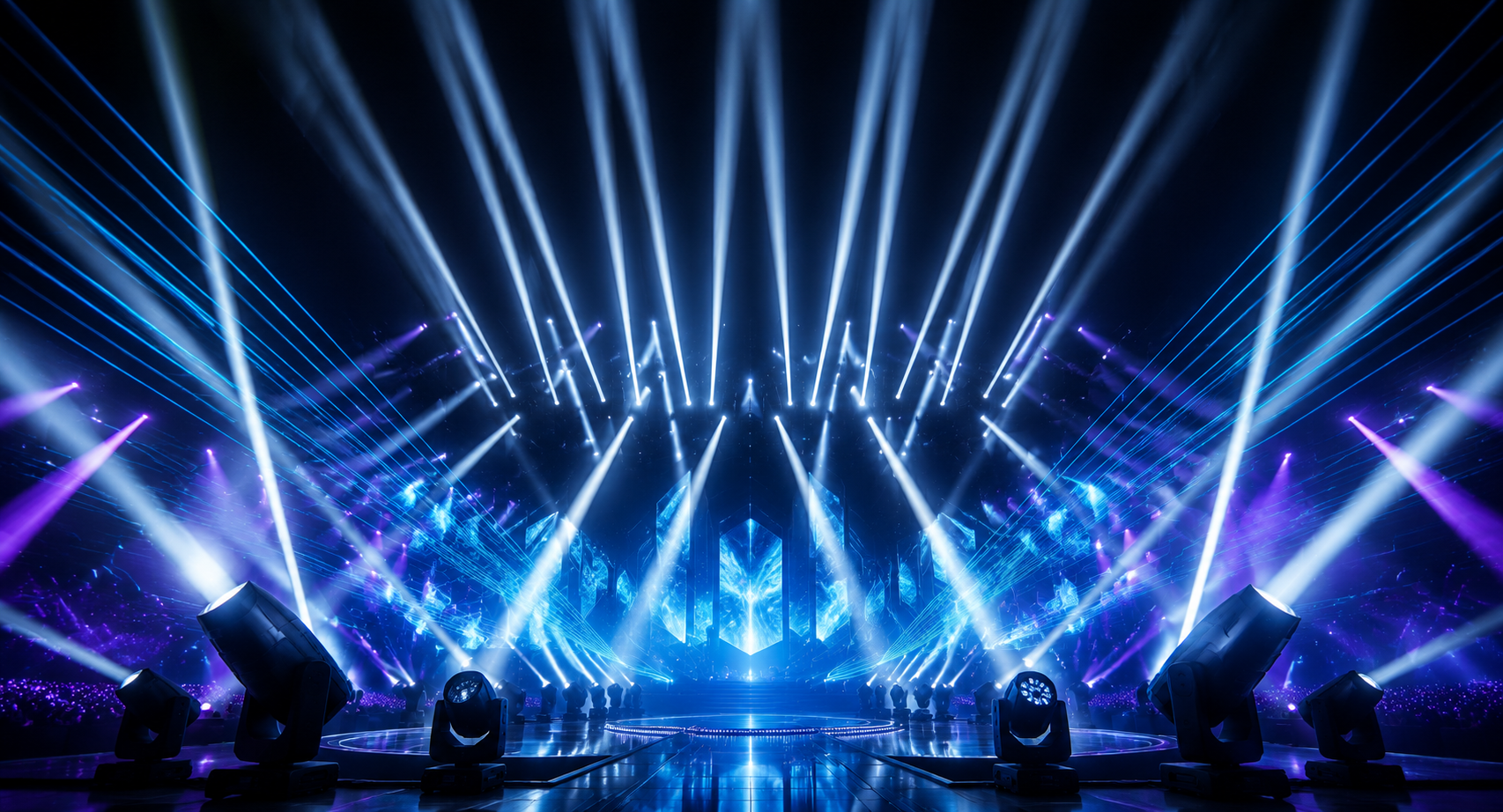
The stage lighting industry is undergoing a dramatic transformation as we approach 2026. Unlike earlier periods that focused mainly on brightness or basic color mixing, today’s lighting design philosophy emphasizes precision, efficiency, atmosphere control, and immersive visual storytelling. Modern audiences expect not just illumination, but emotional impact, spatial depth, and cinematic-level visual experiences.
In this evolving landscape, four major trends are shaping the future of stage lighting: ultra-narrow beam technology, minimalist high-power fixtures, hybrid laser-LED systems, and the upcoming innovations from BLUE SEA LIGHTING designed specifically for next-generation performance environments.
1. Ultra-Narrow Beam: The “Sword-in-the-Sky” Lighting Revolution
One of the most visually striking developments in 2026 stage lighting is the rise of ultra-narrow beam technology. These beams are often described as “light swords piercing the sky,” creating sharp, highly concentrated shafts of light that cut through haze, fog, and atmospheric effects with extreme clarity.
Why Ultra-Narrow Beams Are Trending
Traditional beam lights typically offer moderate beam angles ranging from 3° to 10°. However, modern ultra-narrow beam systems can achieve angles as tight as 0.5° to 2°, producing dramatically focused light columns.
This evolution is driven by several key factors:
Increased demand for high-impact concert visuals
Advanced optical lens engineering
Stronger LED chip efficiency
Integration with haze and atmospheric systems
Visual Impact in Modern Shows
Ultra-narrow beams are particularly effective in:
Electronic dance music festivals
Large stadium concerts
Architectural outdoor performances
High-end theatrical productions
When multiple fixtures are synchronized, they create a lattice of intersecting light beams that feel almost architectural in nature. Designers now use these beams not only for lighting but also as spatial building blocks.
Technical Advantages
Higher beam intensity over long distances
Reduced light diffusion loss
Stronger visibility in outdoor environments
Enhanced synchronization with moving head systems
The result is a more controlled and powerful visual experience that transforms the entire stage into a dynamic light sculpture.
2. Minimalist High-Power Design: Smaller Bodies, Greater Output
The second major trend shaping 2026 stage lighting is the shift toward minimalist high-power fixtures. The philosophy is simple but revolutionary: “smaller size, stronger performance.”
The Engineering Breakthrough
Thanks to advancements in LED chip density, heat dissipation systems, and power management circuits, manufacturers can now design compact fixtures that output significantly higher lumens than previous generations.
This trend is driven by:
High-efficiency LED packaging
Advanced thermal cooling structures
Integrated power driver miniaturization
Lightweight mechanical housing materials
Why Minimalism Matters
Modern stage design increasingly values:
Clean visual environments
Reduced rigging weight
Faster installation and dismantling
Flexible touring systems
Minimalist fixtures reduce the visual clutter on truss structures, allowing lighting designers to focus more on composition and atmosphere rather than equipment visibility.
Applications
Touring concerts
TV broadcast studios
Corporate events
Theater productions
A single compact fixture today can often replace multiple older-generation units, improving efficiency while reducing operational costs.
3. Hybrid Light Sources: Laser + LED Integration Becomes Mainstream
Perhaps the most technically advanced trend in 2026 is the integration of laser and LED hybrid systems.
What Is Hybrid Lighting?
Hybrid lighting combines:
Laser light sources for extreme beam precision and long-distance penetration
LED systems for color richness and smooth wash effects
Together, they form a multi-layered lighting output that offers both sharpness and flexibility.
Why Hybrid Systems Are Gaining Popularity
Hybrid fixtures are becoming essential because they solve a long-standing limitation in stage lighting: the trade-off between beam sharpness and color versatility.
Laser systems alone offer precision but limited color variation. LED systems offer color flexibility but lack extreme beam intensity. Hybrid technology merges both strengths.
Key Benefits
Multi-layer visual output (beam + wash + effect)
Stronger aerial presence
More dynamic color transitions
Enhanced 3D lighting depth
Use Cases
EDM festivals with fast-paced lighting changes
Concerts requiring storytelling lighting transitions
Immersive theater environments
Large-scale multimedia shows
Hybrid systems are also increasingly controlled via AI-driven lighting consoles, allowing real-time adaptation to music and performance cues.
4. BLUE SEA LIGHTING 2026 Product Direction: Designed for the Future
As these trends evolve, BLUE SEA LIGHTING is actively developing next-generation fixtures that align with 2026 market demands.
Design Philosophy
The new product direction focuses on:
Ultra-compact housing with high luminous output
Enhanced optical lens precision systems
Hybrid laser-LED integration architecture
Intelligent DMX + AI adaptive control systems
Key Development Focus
(1) Ultra-Narrow Beam Series
Designed for “sky-piercing” beam effects, optimized for outdoor concerts and large arenas.
(2) Minimalist High-Power Fixtures
Lightweight moving heads with significantly improved lumen-per-watt efficiency.
(3) Hybrid Laser-LED Systems
Multi-effect fixtures combining beam, wash, and color mixing capabilities.
Visual Aesthetic Alignment
The 2026 product line is also designed to match modern visual trends:
Matte black industrial finish
Clean geometric housing design
Reduced external wiring visibility
Modular fixture structure for fast maintenance
Application Scenarios
International touring concerts
Music festivals
Luxury stage productions
Smart performance venues
BLUE SEA LIGHTING aims to provide not just lighting equipment, but complete visual solutions that align with the future of stage storytelling.
5. The Future of Stage Lighting: Beyond Illumination
By 2026, stage lighting is no longer just about visibility. It has become a storytelling tool, a spatial design medium, and a core part of immersive experience creation.
Key Direction of the Industry
More integration with real-time media systems
AI-assisted lighting choreography
Increased focus on audience immersion
Cross-media fusion with XR and holography
Lighting designers are now closer to digital artists than traditional technicians.
Conclusion
The 2026 stage lighting landscape is defined by three major forces: ultra-narrow beam precision, minimalist high-power engineering, and hybrid laser-LED innovation. These technologies are reshaping how performances are visualized and experienced.
BLUE SEA LIGHTING continues to align with these trends, developing advanced fixtures that combine performance, efficiency, and visual artistry into a new generation of stage lighting solutions.



Blue Sea Lighting is an enterprise with rich experience in the integration of industry and trade in stage lighting and stage special effects related equipment. Its products include moving head lights, par lights, wall washer lights, logo gobo projector lights, power distributor, stage effects such as electronic fireworks machines, snow machines, smoke bubble machines, and related accessories such as light clamps.
Quick Links
For more questions subscribe to our email