In contemporary stage design, visual storytelling has evolved far beyond static lighting and traditional scenery. Today’s audiences expect immersive environments where light, color, movement, and atmosphere interact seamlessly to create emotional impact. Among these elements, stage effects play a critical role in shaping how space is perceived, how performances are remembered, and how technology and art converge on modern stages.
At the heart of this evolution lies a growing fascination with making the invisible visible. Air, mist, and motion—once considered secondary—have become expressive tools in their own right. When combined with advanced lighting systems, these elements transform empty space into a living canvas, capable of responding to music, movement, and narrative in real time.
The Role of Atmosphere in Modern Stage Design
Atmospheric effects have long been used in theater and concerts to enhance depth and focus. However, recent technological advancements have elevated these effects from simple background enhancements to core components of visual design. Fog, haze, and bubble-based effects now function as carriers of light, allowing color and brightness to exist not only on surfaces, but throughout the entire performance space.
This shift has redefined how designers think about space. Rather than illuminating objects alone, modern stage effects illuminate volume. Light beams gain texture, colors gain dimension, and movement gains clarity. The audience does not simply watch a performance—they are enveloped by it.
Color as a Language of Emotion
Color has always been one of the most powerful tools in stage art. Different hues evoke different emotions, guide attention, and reinforce themes. With the integration of RGB-based atmospheric effects, color is no longer confined to lighting fixtures alone. Instead, it becomes fluid, suspended in motion, and capable of evolving organically with the performance.
Multi-color atmospheric effects enable designers to paint the air itself. Subtle gradients can suggest calm or mystery, while bold color changes can amplify excitement and intensity. In music festivals, theatrical productions, and immersive installations, this dynamic use of color helps bridge the gap between technology and emotional expression.
From Static Effects to Dynamic Visual Systems
Traditional fog machines served a single purpose: enhancing light visibility. Today’s systems are far more sophisticated. Modern designs incorporate multiple outputs, programmable controls, and integrated lighting elements to create layered visual effects that can be synchronized with sound and motion.
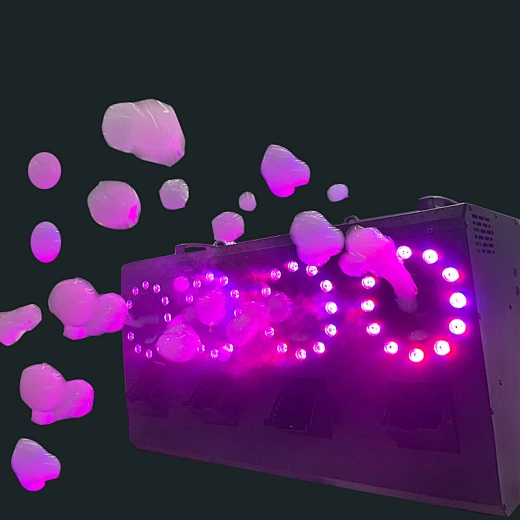
One of the most striking developments is the fusion of bubble effects with colored fog and light. Bubbles introduce movement and playfulness, while fog adds depth and diffusion. When illuminated with vibrant colors, these elements create a constantly shifting visual field that feels both futuristic and artistic.
This convergence of technologies reflects a broader trend in stage design: the move toward multifunctional systems that reduce complexity while expanding creative possibilities.
Technology Meets Art: A New Visual Medium
The intersection of technology and stage art has always driven innovation. As digital control systems become more precise and reliable, designers gain greater freedom to experiment. Atmospheric effects are now programmable, repeatable, and adaptable, making them suitable not only for large-scale concerts but also for permanent installations and themed environments.
This technological maturity allows stage effects to function as a narrative tool. Effects can rise gradually to build anticipation, burst into motion to mark dramatic moments, or fade subtly to signal transitions. In this way, atmosphere becomes part of the storytelling process rather than a decorative afterthought.
Practical Applications Across Industries
The appeal of advanced stage effects extends beyond traditional performance venues. They are increasingly used in corporate events, product launches, exhibitions, theme parks, weddings, and holiday celebrations. Their ability to create memorable visual moments makes them valuable in any context where audience engagement is key.
In entertainment-focused environments, such as nightclubs and festivals, dynamic atmospheric effects amplify energy and excitement. In more controlled settings, such as theaters and exhibitions, they add depth and sophistication without overwhelming the space. The flexibility of modern systems ensures they can be adapted to a wide range of creative and logistical requirements.
A Recommended Solution for Modern Stage Effects
For professionals seeking a powerful and versatile atmospheric solution, the
Four Output 1800W RGB 3-in-1 Bubble Fog Machine
offers an effective balance of performance, creativity, and reliability.
Designed to combine bubble effects, fog output, and RGB color illumination in a single system, this solution enables designers to generate layered, dynamic visuals that interact beautifully with stage lighting. Its multi-output configuration allows for wide coverage, making it suitable for both large venues and immersive installations.
As part of the professional solutions offered by Blue Sea Lighting, this system reflects a commitment to innovation, quality, and creative freedom. The integration of color, motion, and atmosphere within one unit simplifies setup while expanding artistic potential, aligning perfectly with the demands of modern stage production.
Reliability and Creative Efficiency
Beyond visual impact, reliability is essential in professional environments. Advanced atmospheric systems are designed for stable output, consistent performance, and seamless integration with lighting control systems. This ensures that creative ideas can be executed confidently, even in demanding production schedules.
By reducing the need for multiple standalone devices, integrated solutions also improve efficiency. Fewer machines mean simpler logistics, faster setup, and more cohesive visual results. For touring productions and permanent installations alike, this efficiency translates directly into cost savings and creative clarity.
Looking Ahead: The Future of Stage Atmosphere
As audience expectations continue to rise, the role of stage effects will only grow. Future developments are likely to focus on greater interactivity, smarter control systems, and deeper integration with lighting, audio, and digital media. Atmosphere will become increasingly responsive, adapting in real time to performers and audiences alike.
In this evolving landscape, the magic of stage effects lies not only in technology, but in how that technology is used to shape emotion and experience. Color and space, once separate elements, are now inseparable partners in visual storytelling.
By embracing innovative atmospheric solutions and understanding their creative potential, designers and producers can continue to push the boundaries of what is possible on stage—transforming performances into immersive worlds where light, color, and air come together in perfect harmony.



Blue Sea Lighting is an enterprise with rich experience in the integration of industry and trade in stage lighting and stage special effects related equipment. Its products include moving head lights, par lights, wall washer lights, logo gobo projector lights, power distributor, stage effects such as electronic fireworks machines, snow machines, smoke bubble machines, and related accessories such as light clamps.
Quick Links
For more questions subscribe to our email