Outdoor performances have become an essential part of modern entertainment culture. From music festivals and open-air concerts to cultural celebrations, sporting events, and brand activations, outdoor stages offer unparalleled scale and audience engagement. However, unlike indoor venues, outdoor environments introduce complex safety challenges—particularly in lighting systems.
Outdoor performance lighting must operate reliably under changing weather conditions, complex electrical environments, and large-scale structural setups. Without proper safety protection measures, lighting systems can pose serious risks to equipment, performers, technicians, and audiences alike.
This article provides a comprehensive overview of safety protection measures for outdoor performance lighting, covering environmental protection, electrical safety, structural stability, operational management, and emergency preparedness. As a professional stage lighting manufacturer, Blue Sea Lighting integrates these safety principles into product design and real-world applications worldwide.
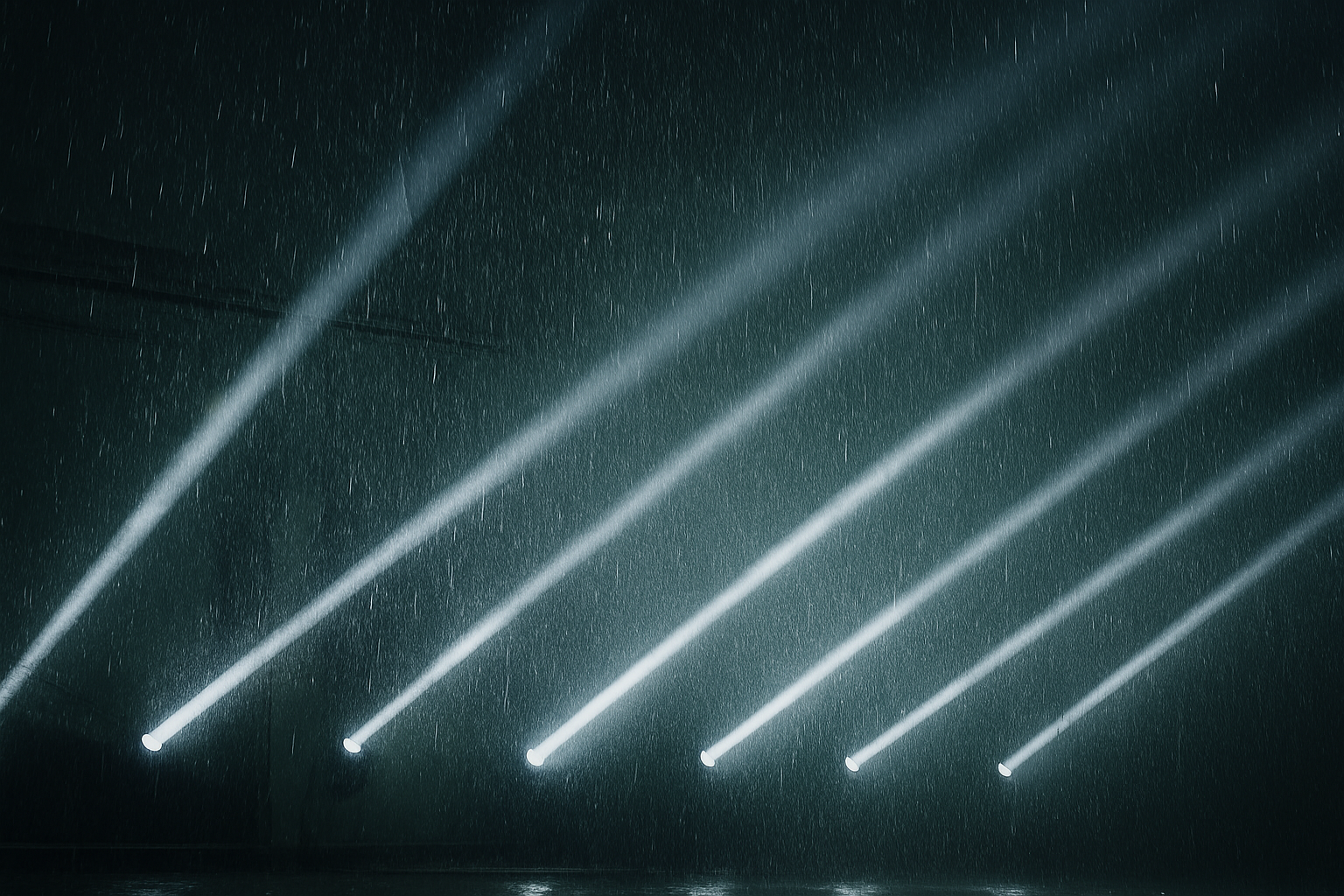
1. Environmental Risks in Outdoor Lighting Applications
Outdoor lighting systems are directly exposed to natural elements. Unlike controlled indoor spaces, outdoor venues face unpredictable environmental factors that can affect both performance quality and operational safety.
Key environmental risks include:
Rain and humidity
High temperatures and direct sunlight
Strong winds
Dust, sand, and airborne particles
Sudden weather changes
To mitigate these risks, lighting equipment must be selected and deployed with environmental resistance in mind. Blue Sea Lighting emphasizes durable housing materials, efficient thermal management, and weather-resistant designs to ensure stable performance in demanding outdoor conditions.
2. Waterproof and Moisture Protection Measures
Water exposure is one of the most common causes of lighting system failure during outdoor events. Even short periods of rainfall or heavy condensation can result in electrical shorts, corrosion, or permanent damage.
Essential waterproof protection measures include:
Using fixtures with appropriate IP ratings
Applying waterproof connectors and sealed cables
Elevating power distribution equipment above ground level
Installing rain covers or protective enclosures where necessary
Professional outdoor lighting solutions from Blue Sea Lighting are engineered with moisture protection in mind, reducing the risk of unexpected shutdowns during live performances.
3. Electrical Safety and Power Management
Electrical safety is a critical component of outdoor lighting protection. Outdoor stages often rely on temporary power systems, generators, or extended cable runs, increasing the risk of overloads, grounding issues, and voltage instability.
Key electrical safety practices include:
Proper grounding of all lighting fixtures and truss systems
Use of residual current devices (RCDs)
Load balancing across power phases
Regular inspection of cables and connectors
Avoiding cable exposure to standing water
By adhering to international electrical standards, Blue Sea Lighting ensures that its lighting systems can be safely integrated into complex outdoor power infrastructures.
4. Structural Stability and Rigging Safety
Outdoor lighting fixtures are often mounted on trusses, towers, or temporary structures. Wind load, vibration, and uneven terrain can significantly affect structural stability.
Critical rigging safety measures include:
Calculating wind load tolerance
Using certified truss systems
Securing fixtures with secondary safety cables
Regularly checking mounting points
Adjusting fixture angles to reduce wind resistance
Professional lighting engineers working with Blue Sea Lighting understand that structural safety is just as important as lighting performance.
5. Heat Management and Fire Prevention
High-powered lighting fixtures generate substantial heat, especially during long performances. In outdoor environments, heat dissipation can be affected by direct sunlight and limited airflow.
Effective heat management strategies include:
Ensuring adequate ventilation around fixtures
Avoiding direct sunlight exposure before operation
Monitoring operating temperatures
Keeping flammable materials away from lighting equipment
Through advanced thermal design, Blue Sea Lighting minimizes overheating risks while maintaining consistent light output.
6. Control Systems and Signal Protection
Outdoor lighting control systems must remain stable despite long-distance signal transmission and potential electromagnetic interference.
Recommended practices include:
Using shielded DMX cables
Avoiding parallel runs with high-voltage power lines
Implementing signal boosters or splitters
Regularly testing control signal integrity
Reliable control systems are a cornerstone of safe outdoor lighting operations, a principle deeply embedded in the solutions offered by Blue Sea Lighting.
7. Operational Safety and Crew Training
Even the most advanced equipment cannot guarantee safety without proper human operation. Well-trained crews are essential for identifying risks and responding effectively.
Key operational safety measures include:
Pre-event safety briefings
Clear role assignments
Routine equipment inspections
Strict lockout procedures during maintenance
Real-time monitoring during performances
Blue Sea Lighting supports lighting professionals by providing clear documentation and technical guidance to reduce operational risks.
8. Emergency Preparedness and Risk Management
Outdoor events require contingency planning for unexpected situations such as severe weather, power outages, or equipment failure.
Effective emergency preparedness includes:
Backup power systems
Emergency shutdown procedures
Weather monitoring protocols
Evacuation coordination with event organizers
Safety-conscious lighting design, as promoted by Blue Sea Lighting, ensures that emergency scenarios can be managed quickly and effectively.
9. Compliance with International Safety Standards
Outdoor lighting systems must comply with relevant safety standards and regulations, which may vary by region but share common principles.
These standards typically address:
Electrical safety
Structural integrity
Environmental protection
Operational procedures
By aligning with international compliance frameworks, Blue Sea Lighting delivers lighting solutions trusted by global event professionals.
10. Conclusion
Safety protection measures are not optional in outdoor performance lighting—they are essential. From environmental resistance and electrical safety to structural stability and operational discipline, every detail contributes to a successful and secure event.
With professional design, rigorous testing, and industry expertise, Blue Sea Lighting continues to provide reliable outdoor lighting solutions that balance performance excellence with uncompromising safety standards.



Blue Sea Lighting is an enterprise with rich experience in the integration of industry and trade in stage lighting and stage special effects related equipment. Its products include moving head lights, par lights, wall washer lights, logo gobo projector lights, power distributor, stage effects such as electronic fireworks machines, snow machines, smoke bubble machines, and related accessories such as light clamps.
Quick Links
For more questions subscribe to our email