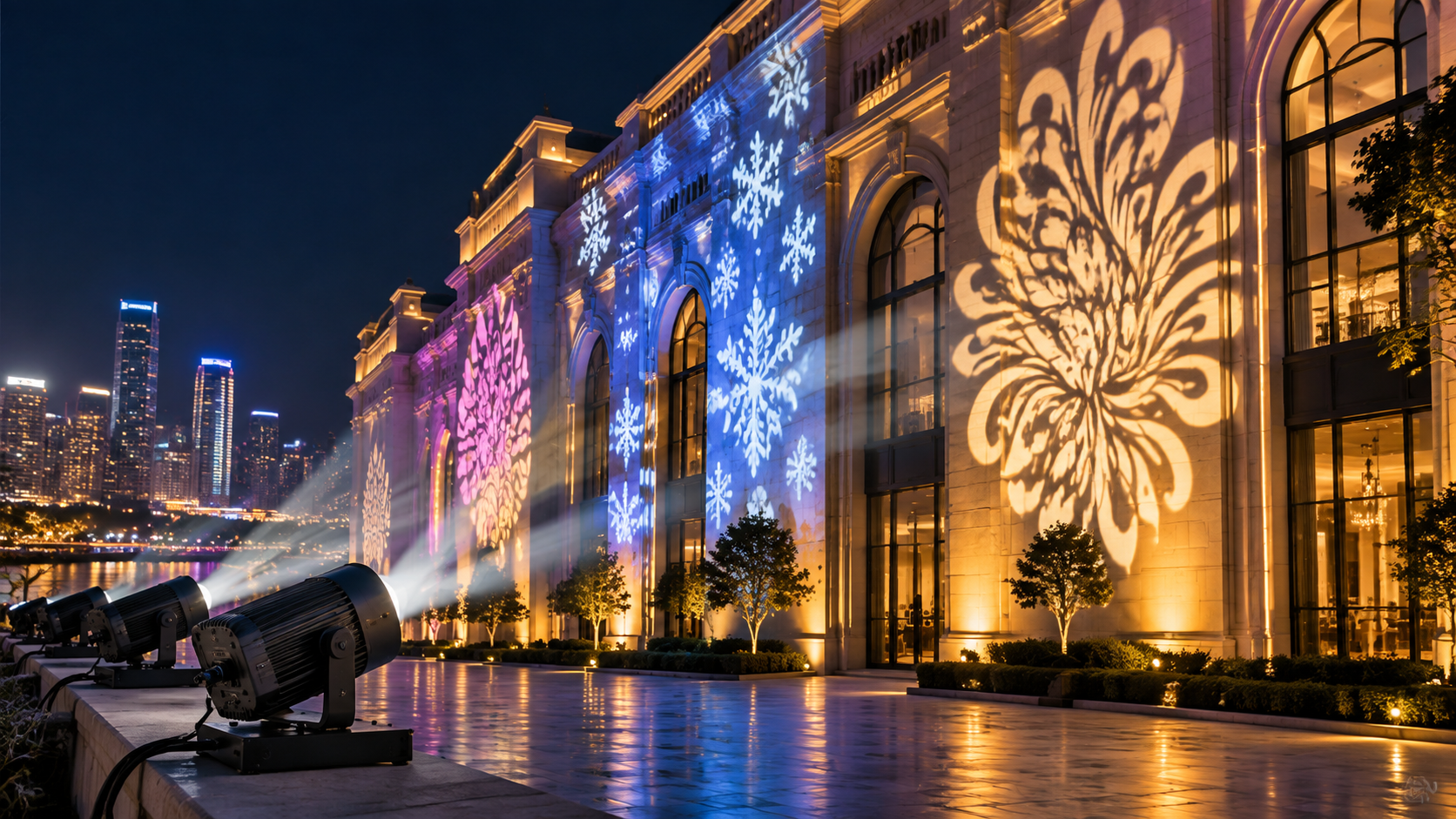
Creating Stunning Architectural Effects with Professional Outdoor Gobo Lights
As cities continue to evolve and commercial spaces seek more attractive visual identities, outdoor architectural lighting has become an essential element in modern urban design. Buildings are no longer only functional structures; they have become landmarks that communicate brand value, culture, and creativity through carefully designed lighting solutions.
Among various architectural lighting technologies, outdoor gobo lights have gained significant popularity because they allow designers to project customized patterns, logos, textures, and artistic effects onto building surfaces. From hotels and shopping centers to historical buildings and entertainment venues, gobo projection technology provides an efficient and creative way to transform ordinary facades into impressive nighttime displays.
A professional gobo light on wall application can highlight architectural details, enhance building visibility, and create memorable experiences for visitors. Meanwhile, window gobo lighting offers unique opportunities to decorate glass surfaces, office buildings, retail stores, and event venues with dynamic images and brand messages.
For professional outdoor projects, selecting the right lighting equipment is critical. Factors such as projection distance, waterproof protection, heat management, and color performance directly influence the final lighting effect and long-term reliability.
Blue Sea Lighting specializes in providing professional stage and architectural lighting solutions for global customers, helping designers, contractors, and event professionals create outstanding lighting environments.
Long-Distance Projection: How to Choose High-Power Light Sources for Full Wall Coverage
One of the biggest challenges in outdoor architectural lighting projects is achieving sufficient brightness over large surfaces. When illuminating a high-rise building, historical facade, or large commercial wall, standard lighting fixtures often cannot provide enough intensity. This is where high-power outdoor gobo projection systems become essential.
Understanding Projection Distance and Light Output
The distance between the fixture and the target surface directly affects brightness and image clarity. The farther the projection distance, the more powerful the light source needs to be.
For example:
Small decorative projects may require 50W–100W LED gobo projectors.
Medium-sized buildings often need 150W–300W professional fixtures.
Large architectural facades may require 400W, 600W, or higher-power LED solutions.
High-power LED engines provide stronger illumination while maintaining energy efficiency and long operational life. Compared with traditional discharge lamps, modern LED technology offers better color stability, lower maintenance costs, and instant startup capability.
When selecting outdoor gobo lights, designers should consider:
1. Building Size and Projection Area
A large wall surface requires higher lumen output to maintain uniform brightness. If the lighting output is insufficient, the projected image may appear faded, especially in urban environments with surrounding ambient light.
Professional lighting designers usually calculate:
Projection distance
Beam angle
Surface reflection characteristics
Required brightness level
Ambient lighting conditions
A narrow beam angle is suitable for long-distance projection because it concentrates light energy into a smaller area, creating a brighter image. A wider beam angle works better for closer installations where larger coverage is required.
2. Optical Lens Design for Clear Projection
The optical system is another important factor affecting gobo performance. High-quality lenses ensure:
Sharp image edges
High contrast projection
Reduced light loss
Better focus adjustment
For architectural applications, adjustable focus and zoom functions provide greater flexibility. Installers can fine-tune the projection size according to different building structures without changing the installation position.
A professional gobo light on wall should maintain clear patterns even when installed several meters away from the target surface. Poor optical design can result in blurred images, uneven brightness, and reduced visual impact.
All-Weather Protection: Understanding the Importance of IP65/IP66 Ratings in Outdoor Projects
Outdoor lighting systems operate in challenging environments. Rain, humidity, dust, temperature changes, and pollution can affect equipment performance. Therefore, waterproof and dustproof protection is one of the most important considerations when selecting outdoor architectural lighting products.
What Does IP65 Mean?
The IP65 protection rating consists of two numbers:
The first number (6) represents complete protection against dust.
The second number (5) represents protection against water jets from different directions.
An IP65-rated outdoor gobo light can operate reliably in:
Rainy weather
Dusty environments
Outdoor events
Commercial building installations
Landscape lighting projects
This makes IP65 one of the most commonly used protection levels for professional outdoor lighting equipment.
What Does IP66 Mean?
IP66 provides an even higher level of water protection.
The rating means:
Complete dust protection
Protection against powerful water jets
Compared with IP65, IP66 fixtures are designed for more demanding environments where stronger water exposure may occur.
Typical applications include:
Coastal buildings
Large outdoor entertainment venues
Public squares
Long-term permanent installations
For projects requiring year-round operation, choosing IP66 outdoor gobo lights can significantly improve reliability and reduce maintenance requirements.
Why Waterproof Protection Matters for Architectural Lighting
Architectural lighting installations are often difficult and expensive to access. A fixture installed on a building facade may require professional equipment or cranes for maintenance.
A high protection rating helps reduce:
Water damage risks
Internal component corrosion
Electrical failures
Unexpected maintenance costs
For architects, lighting designers, and project contractors, selecting weather-resistant equipment is not only about protecting the fixture—it is about ensuring consistent visual performance throughout the entire project lifecycle.
Light Decay Control: How Thermal Management Extends LED Lifespan
In outdoor architectural lighting projects, brightness consistency is one of the most important factors determining long-term visual quality. A lighting system may produce excellent effects when newly installed, but without effective heat management, LED performance can gradually decrease over time.
This phenomenon is known as light decay. It refers to the gradual reduction of LED brightness caused by aging, thermal stress, and continuous operation.
For professional outdoor gobo lights, controlling light decay is essential because many architectural lighting projects require continuous operation for several years with minimal maintenance.
Why Heat Management Is Critical for LED Lighting Performance
LED technology is highly efficient, but a significant amount of electrical energy is still converted into heat. If this heat cannot be effectively removed, it can negatively affect:
LED chip performance
Color consistency
Optical efficiency
Electronic component lifespan
Overall fixture reliability
High temperatures accelerate the aging process of LED chips. When an outdoor lighting fixture operates every night for long periods, poor thermal design can cause noticeable brightness reduction and color changes.
Therefore, professional architectural lighting manufacturers focus heavily on advanced cooling solutions.
Advanced Cooling Technologies for Outdoor Gobo Lights
1. High-Efficiency Heat Sink Design
A quality outdoor gobo projector usually adopts an aluminum heat sink structure.
Aluminum provides:
Excellent thermal conductivity
Lightweight construction
Corrosion resistance
Long-term durability
The heat sink increases the surface area available for heat dissipation, allowing heat to transfer away from the LED module more efficiently.
For large-power fixtures such as 300W, 400W, or 600W LED gobo projectors, optimized heat sink design is especially important because high-power LED engines generate significantly more heat.
2. Intelligent Temperature Control System
Modern professional lighting systems often include intelligent temperature monitoring.
When the internal temperature reaches a certain level, the control system can automatically:
Adjust fan speed
Reduce LED power temporarily
Protect internal components
Prevent overheating damage
This technology allows outdoor architectural lighting fixtures to maintain stable operation even in extreme weather conditions.
3. Efficient Air Circulation Design
Outdoor lighting fixtures must balance waterproof protection and heat dissipation.
Traditional cooling methods often rely on ventilation openings, but outdoor environments create challenges because openings may allow water and dust to enter.
Professional IP65/IP66 lighting solutions use:
Sealed cooling channels
Waterproof fans
Internal airflow optimization
Pressure balance systems
These designs maintain cooling performance while protecting electronic components from external conditions.
Improving LED Lifespan Through Better Thermal Design
A well-designed cooling system can significantly extend LED operating life.
Typical advantages include:
Longer LED Lifespan
Stable operating temperatures help LED chips maintain performance for tens of thousands of hours.
More Consistent Colors
Temperature control prevents unwanted color shifts, ensuring the building appearance remains consistent.
Reduced Maintenance Costs
Long-lasting fixtures reduce replacement frequency, especially for large-scale architectural installations.
Better Investment Value
Although premium outdoor lighting systems may require a higher initial investment, improved durability creates better long-term value.
For commercial buildings, hotels, shopping centers, and public spaces, reliable thermal management is a key factor in achieving sustainable lighting performance.
City Color Series: Creating Dynamic Urban Beauty Through Architectural Lighting
Modern cities are increasingly using lighting to enhance identity, improve nighttime experiences, and create attractive public environments. The development of City Color lighting solutions has introduced new possibilities for architectural decoration.
Unlike traditional static lighting, City Color systems combine powerful LED technology with advanced color control, allowing buildings to become dynamic visual landmarks.
What Is City Color Lighting?
City Color lighting refers to professional outdoor LED lighting systems designed for:
Building facades
Bridges
Parks
Landscape structures
Public spaces
Cultural landmarks
These systems typically provide:
RGB/RGBW color mixing
High brightness output
Smooth dimming
Dynamic color effects
DMX512 control compatibility
With precise programming, designers can create different moods for different occasions.
For example:
Warm white lighting for elegant architectural presentations
Blue tones for modern technology buildings
Red and gold effects for festivals
Dynamic color transitions for entertainment events
Practical Applications of City Color in Building Beautification
1. Commercial Buildings and Shopping Centers
Retail environments use architectural lighting to attract visitors and strengthen brand identity.
A carefully designed gobo light on wall effect can display:
Company logos
Seasonal patterns
Promotional messages
Decorative textures
This transforms a simple building facade into an interactive advertising space.
2. Hotels and Resorts
Luxury hotels often use architectural lighting to create premium guest experiences.
Outdoor gobo lights can highlight:
Entrance areas
Architectural structures
Garden landscapes
Decorative windows
Meanwhile, window gobo lighting can create elegant patterns on glass surfaces, improving nighttime appearance and creating memorable visual experiences.
3. Historical Buildings and Cultural Sites
Lighting plays an important role in protecting and presenting cultural heritage.
Professional lighting designers carefully select:
Appropriate brightness levels
Suitable color temperatures
Non-damaging projection methods
Gobo projection allows detailed architectural elements to be emphasized without installing excessive permanent structures.
The Future of Outdoor Architectural Lighting
The future of architectural lighting will focus on:
Higher energy efficiency
Smart control systems
Sustainable LED technology
Personalized lighting experiences
Integration with urban digital systems
As cities become more connected, outdoor lighting will move beyond simple illumination and become part of smart city design.
Professional outdoor gobo lights, advanced window gobo lighting, and creative gobo light on wall applications will continue helping architects and designers transform buildings into impressive nighttime landmarks.
Choosing the Right Outdoor Gobo Lighting Solution
Before selecting a lighting system, project managers should evaluate several key factors:
1. Projection Distance
Choose the appropriate power level according to the installation distance and wall size.
Long-distance applications require:
Higher wattage LED engines
Better optical lenses
Narrow beam projection
2. Environmental Conditions
Consider:
Rain exposure
Temperature changes
Dust levels
Installation location
For permanent outdoor installations, IP65 or IP66 protection is highly recommended.
3. Lighting Effect Requirements
Different projects may require:
Static logo projection
Moving patterns
Color-changing effects
Architectural highlighting
Festival decoration
Selecting a flexible lighting system ensures future application possibilities.
4. Maintenance and Operating Costs
A reliable fixture should provide:
Long LED lifespan
Efficient cooling
Stable brightness
Easy maintenance access
The total project value depends not only on initial cost but also long-term performance.
Conclusion: Transform Buildings with Powerful and Reliable Gobo Lighting
Outdoor architectural lighting has become a powerful tool for improving city landscapes, commercial spaces, and public environments. Through advanced projection technology, buildings can communicate creativity, identity, and emotion after sunset.
High-power light sources ensure large-scale facade coverage. IP65/IP66 protection guarantees reliable operation in challenging outdoor conditions. Advanced thermal management reduces light decay and extends LED lifespan. Meanwhile, City Color lighting solutions provide unlimited possibilities for creating dynamic urban environments.
Whether illuminating a landmark building, decorating a hotel facade, or creating a branded commercial display, professional gobo technology offers a flexible and effective solution.
With the continuous development of LED innovation, outdoor architectural lighting will continue to redefine how people experience cities at night.



Blue Sea Lighting is an enterprise with rich experience in the integration of industry and trade in stage lighting and stage special effects related equipment. Its products include moving head lights, par lights, wall washer lights, logo gobo projector lights, power distributor, stage effects such as electronic fireworks machines, snow machines, smoke bubble machines, and related accessories such as light clamps.
Quick Links
For more questions subscribe to our email