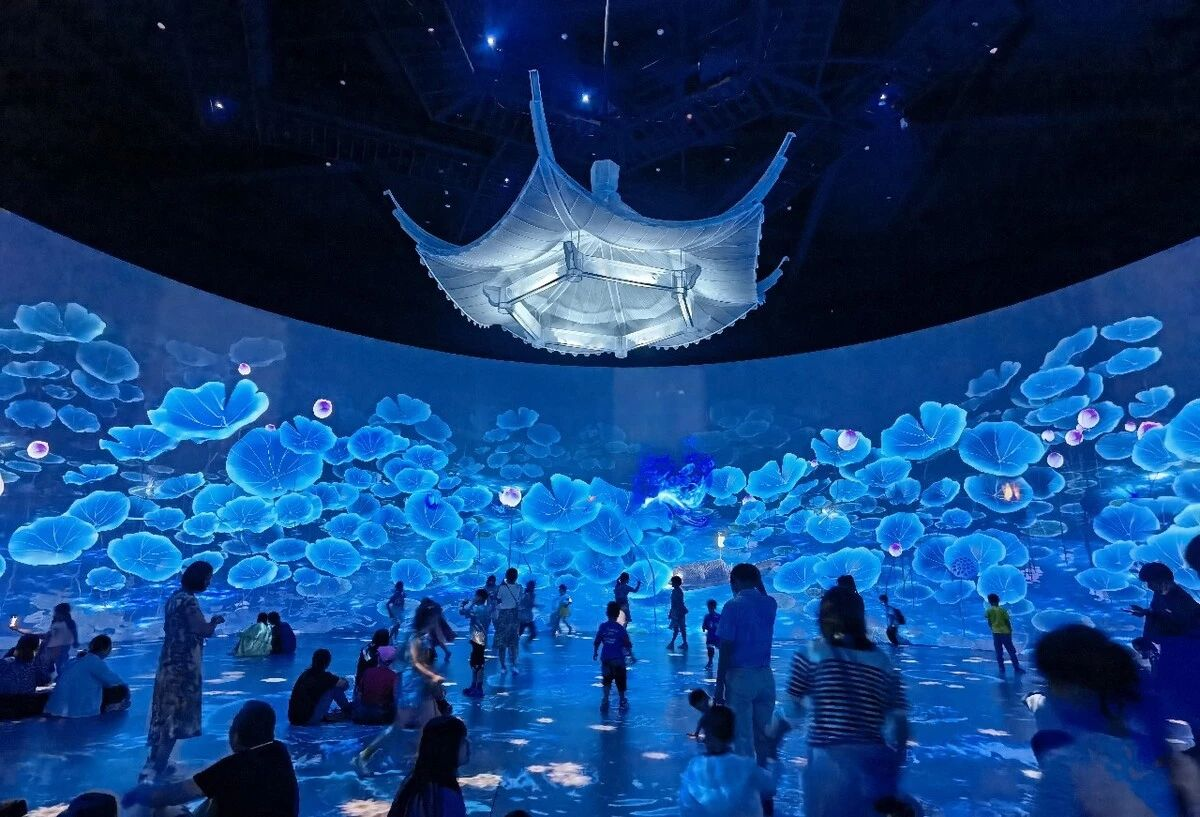
Projection-sensitive environments—such as theaters, museums, conference halls, and immersive installations—pose a unique lighting challenge. The goal is to illuminate the space or performers without degrading the clarity, color, or contrast of projected imagery.
Striking the right balance between visibility and image preservation requires a careful understanding of fixture types, beam control, color temperature, and positioning. This article explores best practices for lighting in projection-critical venues and outlines the key technologies that help achieve seamless visual integration.
1. Understanding Projection-Sensitive Spaces
In spaces where projection is a core element of the visual experience, traditional stage lighting approaches often fall short. Common scenarios include:
Edge-blended large-format projections on curved or compound surfaces
Rear projection installations in museums and exhibits
Multi-screen immersive environments where lighting must avoid specific zones
Projection-mapped theatrical sets requiring highly localized illumination
The wrong fixture, angle, or intensity can wash out the projected image, introduce glare, or cause distracting reflections.
2. Key Lighting Design Goals
When lighting in projection-sensitive environments, designers should focus on:
Minimizing light spill: Prevent unintended illumination of projection surfaces
Preserving contrast: Keep the projection surface as dark as possible when not illuminated
Avoiding hotspotting: Prevent intense reflections that distort visual content
Color harmony: Match lighting color temperature to the projected content
Silent operation: Ensure fan noise doesn’t interfere in close-range, intimate installations
Each of these goals informs fixture selection, lens choice, and mounting strategy.
3. Recommended Fixture Characteristics
A. Narrow Beam Angle or Framed Spotlights
Fixtures with a tight beam—such as LED profile spotlights with framing shutters—allow lighting to be sculpted precisely, avoiding spill into projection areas.
B. Tunable White and High CRI Output
Tunable white (2700K–6500K) allows matching of the scene lighting with the projection’s white point. A high CRI ensures that physical objects under light appear natural even when surrounded by digital imagery.
C. Fresnel or Soft Wash Fixtures with Barn Doors
If ambient wash is needed, Fresnel fixtures with barn doors or top hats allow soft-edge lighting while still minimizing stray beams.
D. Dimming and Flicker-Free Operation
Smooth 16-bit dimming with no flicker (critical for video integration) ensures seamless fade-ins and blackout moments.
4. Practical Techniques for Integration
To reduce conflicts between lighting and projection, consider the following techniques:
Cross-light instead of front-light: Light from the sides of the stage or set to avoid overlapping the projected image
Use gobos and cuts: Insert physical beam shaping tools to contour light output
Raise fixture height: Aim downward rather than projecting across surfaces
DMX cue linking: Sync lighting fades with projection cues to shift focus
Black wrap and top hats: Control lens spill and direct light narrowly
These methods allow creative expression while maintaining projection clarity.
5. Typical Applications and Their Challenges
| Application | Challenge | Lighting Solution |
|---|
| Theatrical stage with rear projection | Performers block screen or light spills onto projection | Side-spot LED profiles with shutter cuts |
| Museum with object projection | Light needed for artifacts, not screens | Framed spotlights with narrow lenses |
| Dome projection environment | Any wash distorts full-dome visuals | Ground-based uplights with limited output and tight spread |
| Interactive immersive room | Projection mapped on floor and walls | Carefully angled top lighting, low-output pixel wash bars |
Each space benefits from low-glare, highly controllable lighting solutions.
6. Lighting Control Considerations
Multiple universes may be required to independently address projection zones and ambient lighting
Zone-based programming allows timed scene transitions to switch emphasis between lighting and projection
Art-Net or sACN integration enables tight synchronization with media servers (e.g., Disguise, TouchDesigner, Resolume)
Control systems are as critical as fixtures themselves in maintaining projection integrity.
7. Future Trends
Projection-sensitive environments are increasingly merging physical and digital storytelling. Lighting that reacts to content in real time—using tracking, sensors, or content-aware triggers—is becoming standard in museums and live performance.
Newer developments include:
LED framing projectors with high-resolution cut control
IP-rated soft-edge fixtures for outdoor projection zones
Battery-powered uplights with tight beam angles and wireless control for temporary setups
Designers must embrace flexibility, subtlety, and integration as guiding principles.
READ MORE: